America's Dream HomeWorks

calculating roof pitch

Calculating Roof Pitch: A Simple Guide Every Homeowner Can Follow

If you’ve ever talked to a roofer, planned a home addition, or even browsed roofing materials, chances are you’ve heard the term roof pitch come up. And usually right after that, homeowners nod politely while thinking, “I should probably understand what that means.”

You’re not alone.

Calculating roof pitch sounds technical, but it’s actually one of those home concepts that’s much simpler than it looks — and incredibly useful once you understand it. Roof pitch affects everything from how your home handles rain and snow to what roofing materials you can use and how much a project will cost.

So let’s walk through it together, step by step, in plain language. No construction background required.


What Is Roof Pitch, Anyway?

Roof pitch describes how steep your roof is. Instead of measuring it in degrees (like a hill or ramp), roof pitch is usually expressed as a ratio.

The standard format looks like this:

X:12

That means for every 12 inches of horizontal run, the roof rises X inches vertically.

For example:

  • 4:12 pitch → the roof rises 4 inches for every 12 inches of run

  • 6:12 pitch → the roof rises 6 inches for every 12 inches of run

The higher the first number, the steeper the roof.


Why Calculating Roof Pitch Matters

You might be wondering why homeowners even need to know this. Here’s why roof pitch is important:

  • It determines what roofing materials can be used

  • It affects drainage and how well your roof sheds water and snow

  • It impacts installation cost and labor

  • It influences your home’s appearance and style

  • It matters for permits, repairs, and replacements

Whether you’re planning a full roof replacement or coordinating broader exteriors remodeling, knowing your roof pitch gives you clarity.

The Easiest Way to Calculate Roof Pitch (From the Attic)

If you can safely access your attic, this is the simplest and most accurate method.

What you’ll need:

  • A tape measure

  • A level (12 inches long works best)

Step-by-step:

  1. Place the level flat against the bottom of a roof rafter

  2. Measure 12 inches along the level from one end

  3. From that 12-inch mark, measure straight up to the rafter

That vertical measurement is your roof pitch.

Example:

  • If the rise is 5 inches → your roof pitch is 5:12

  • If the rise is 8 inches → your roof pitch is 8:12

That’s it. You’ve just calculated your roof pitch like a pro.


How to Calculate Roof Pitch From the Roof (Safely)

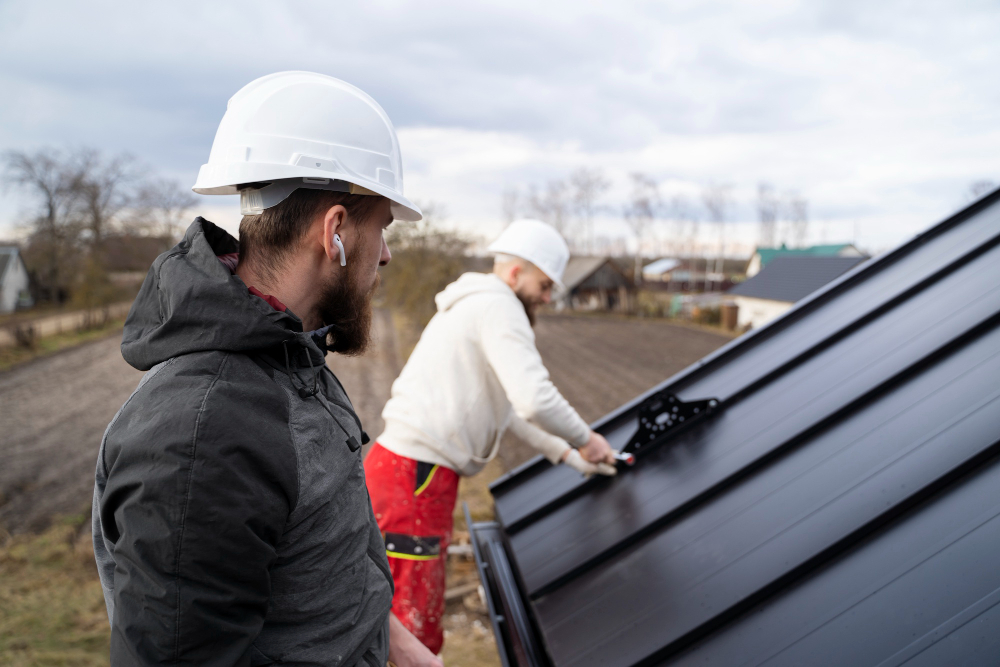
If you’re comfortable on a ladder and the roof isn’t too steep, you can measure from the outside — but safety comes first. If you’re unsure, leave this to a professional experienced in exterior remodeling projects.

You’ll need:

  • A sturdy ladder

  • A level

  • A tape measure

Steps:

  1. Place the level horizontally on the roof surface

  2. Measure 12 inches along the level

  3. Measure vertically from the roof surface up to the level

Again, that vertical number is your pitch.


Common Roof Pitch Ranges (And What They Mean)

Understanding where your roof falls on the spectrum helps put the number into context.

Low-Slope Roofs (1:12 to 3:12)

  • Often seen on modern or commercial buildings

  • Require special roofing materials

  • Drain water more slowly

Standard Residential Roofs (4:12 to 9:12)

  • Most common for homes

  • Great balance of drainage and walkability

  • Compatible with asphalt shingles, metal roofing, and more

Steep Roofs (10:12 and higher)

  • Dramatic appearance

  • Excellent for snow runoff

  • More expensive to install

  • Require extra safety equipment

Check Our Recent Projects

Converting Roof Pitch to Degrees (Optional but Useful)

Some manufacturers and engineers use degrees instead of ratios.

Here are a few common conversions:

  • 4:12 pitch ≈ 18.4°

  • 6:12 pitch ≈ 26.6°

  • 8:12 pitch ≈ 33.7°

  • 12:12 pitch = 45°

You don’t need to memorize these, but it helps when reviewing technical specs or product requirements.


How Roof Pitch Affects Roofing Materials

This is where calculating roof pitch really pays off.

Asphalt Shingles

  • Typically require a minimum 4:12 pitch

  • Some products allow 3:12 with special underlayment

Metal Roofing

  • Works well on low to steep slopes

  • Some systems can go as low as 2:12

Tile or Slate

  • Best on steeper roofs

  • Helps prevent water intrusion

Flat Roofing Systems

  • Designed for very low slopes

  • Not interchangeable with shingle systems

Using the wrong material for your pitch can lead to leaks, premature wear, and voided warranties — especially when paired with siding, windows, or siding remodeling upgrades.

Roof Pitch and Project Costs

Steeper roofs cost more — and here’s why:

  • More labor time

  • Specialized safety equipment

  • Slower installation

  • Greater material waste

A simple difference between a 4:12 and an 8:12 pitch can noticeably change a roofing estimate. When you understand your pitch, those numbers make a lot more sense — particularly when planning full exterior remodeling projects.


When You Should Call a Professional

While calculating roof pitch is straightforward, you should rely on a professional if:

  • Your roof is very steep

  • You’re planning a major roofing project

  • You need measurements for permits

  • You want confirmation before ordering materials

A contractor can quickly verify pitch and factor it accurately into your project plan.


Final Thoughts

Calculating roof pitch doesn’t require advanced math or construction experience — just a little know-how and the right tools. Once you understand how pitch works, you’ll be better prepared to talk with contractors, choose materials confidently, and understand why certain roofing decisions are recommended for your home.

It’s one of those small pieces of home knowledge that pays off again and again.

At America’s Dream HomeWorks, we help homeowners navigate roofing and exterior remodeling projects with clarity and confidence — from understanding roof pitch to selecting materials and coordinating installation. If you’re planning a project or simply want expert guidance, we’re always happy to help.