I remember standing in a showroom with a client named Rachel last spring. She had spent weeks agonizing over cabinet colors, backsplash tiles, and faucet finishes. But when we got to the countertops, she froze. “I keep hearing different things about thickness,” she said, running her hand across a 2cm quartz countertop sample. “Is thinner just code for cheaper? Am I making a mistake if I don’t go with the thicker slab?”
Her questions stuck with me because I hear some version of them from almost every homeowner I work with. So let me walk you through what I told Rachel that day—and what I’ve learned from years of helping people make this exact decision.
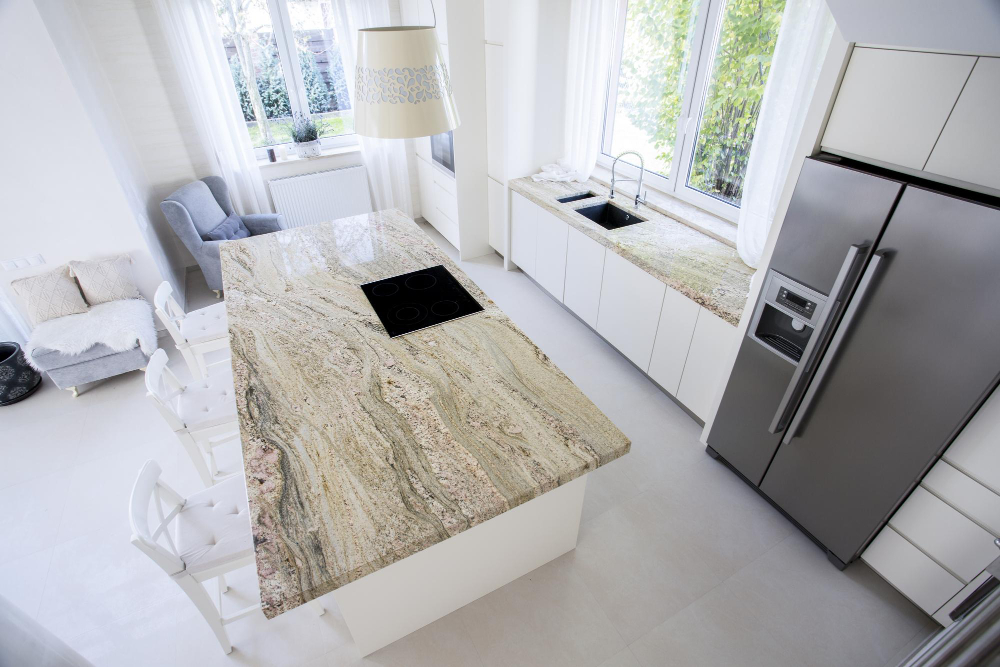
First, I showed her what 2cm actually means. We grabbed a tape measure and looked at the edge of a sample slab. Twenty millimeters—about three-quarters of an inch. “Now watch this,” I said, and walked her over to a 3cm slab. Same engineered quartz material, same color, same subtle veining she loved. She leaned in close, comparing them side by side. “They’re identical,” she said, almost surprised. Exactly. The material doesn’t change between thicknesses. What changes is how the slab gets fabricated, how much support it needs underneath, and how it fits into the overall look of your kitchen.
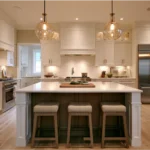
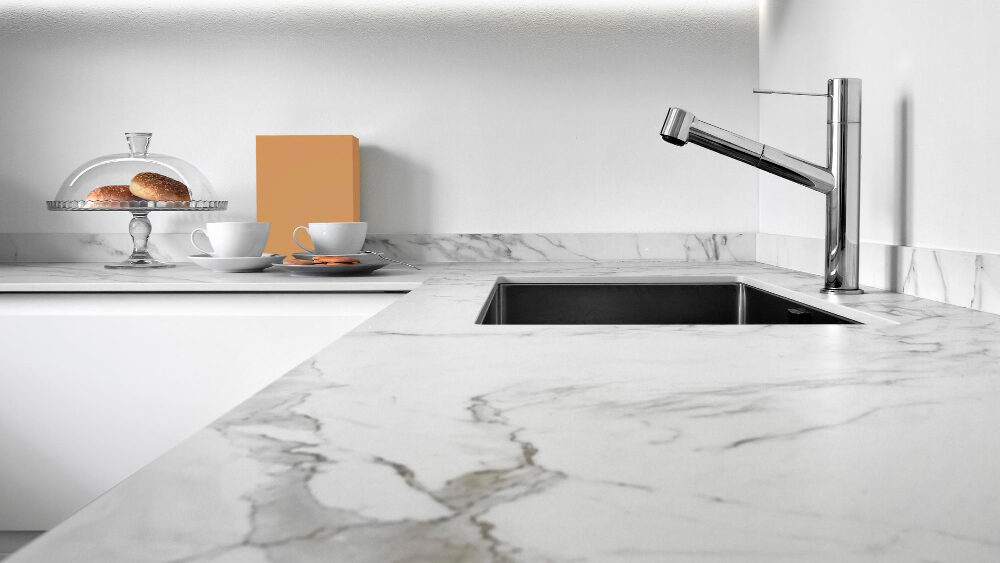
Then Rachel asked the question everyone asks: “Does it look cheap?” I pointed to a fully installed display kitchen across the showroom. “What thickness do you think that island countertop is?” She studied it from a few angles, walked around to look at the edge profile, and finally guessed 3cm. It was 2cm with a mitered edge. The fabricator had laminated the front edge to create the appearance of a much thicker slab. I’ve seen this trick transform how homeowners feel about thinner quartz—once they realize they can get that substantial, luxury look without paying for a full 3cm slab, the decision gets a whole lot easier. A straight edge keeps things clean and modern. A beveled edge adds a subtle decorative touch. A bullnose softens the profile for a more traditional feel. And a mitered edge? That’s the secret weapon.
Of course, I had to be honest with Rachel about support. Some 2cm installations need a little extra help underneath—plywood subtops, metal brackets, maybe some decorative corbels if you’re doing a seating overhang. She initially looked concerned, so I explained it’s all standard practice. “Think of it like a good foundation under a house,” I told her. “You don’t see it, but it’s what keeps everything solid for decades.” Her fabricator would handle all of that, and it wouldn’t be something she’d ever need to think about again once the countertops were installed.
The weight difference actually turned out to be a selling point for Rachel. Her kitchen was on the second floor of an older home, and the idea of lighter slabs putting less stress on her cabinets gave her genuine peace of mind. It also meant the installation crew could maneuver the pieces more easily through her narrow hallway—a small detail that can make a big difference on installation day.
When we sat down to talk numbers, I gave her the honest breakdown. Yes, 2cm slabs often cost less because they use less material. But I showed her how fabrication complexity, the mitered edge she wanted, cutouts for her farmhouse sink and cooktop, and installation labor all factor into the final price. Sometimes the material savings hold. Sometimes a decorative edge brings the total closer to a 3cm slab. “The key,” I told her, “is getting a clear quote that shows you exactly where your money is going.”
Rachel also asked if thinner meant weaker. I get this question constantly, and I understood why she was nervous—her kitchen sees serious action with two young kids, weekend baking marathons, and homework sessions sprawled across the island. I reassured her that quartz is one of the toughest countertop materials available, period. A properly installed 2cm slab handles daily wear without blinking. It resists scratches, shrugs off stains, doesn’t absorb moisture, and takes spills in stride. I still recommended cutting boards and trivets, but that’s just common sense with any surface.
Check Our Recent Projects
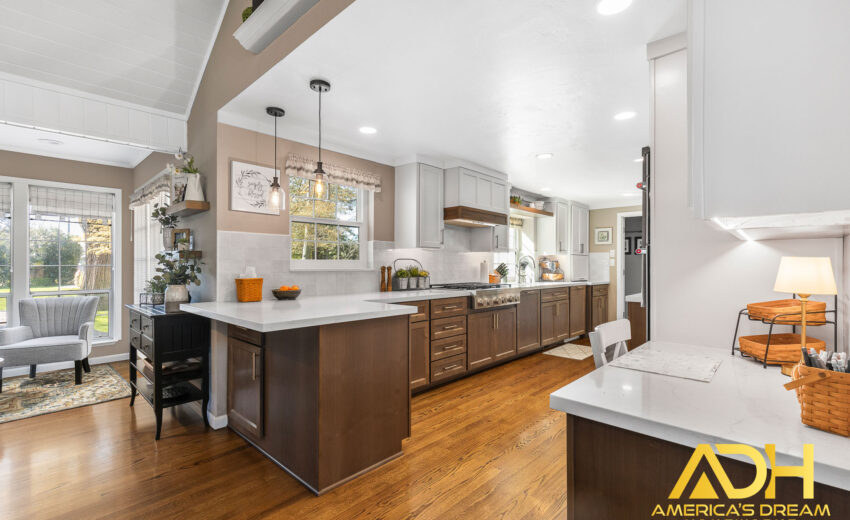
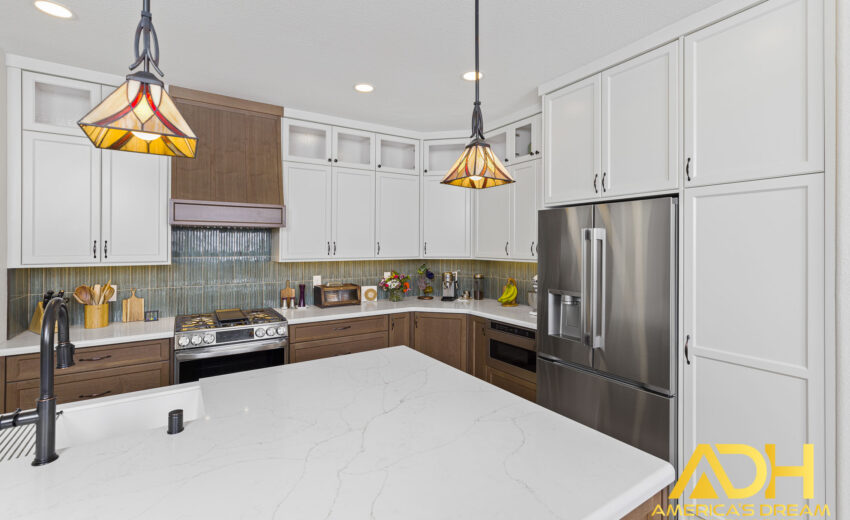
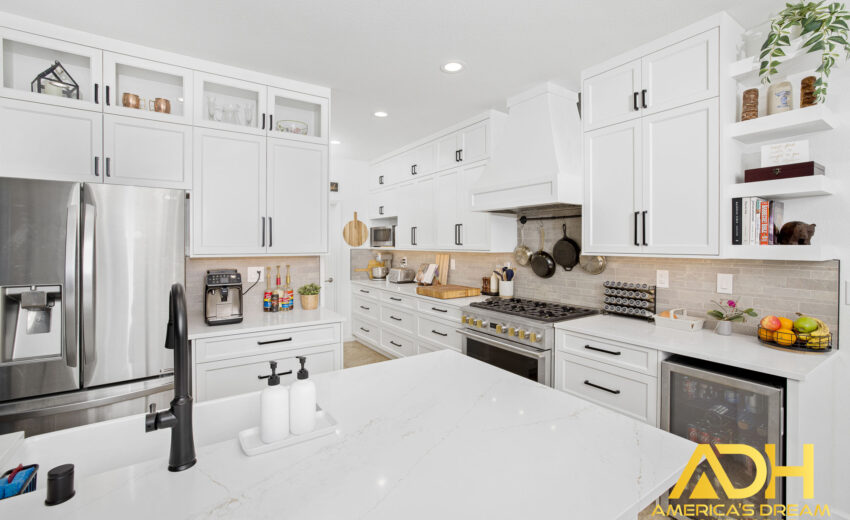
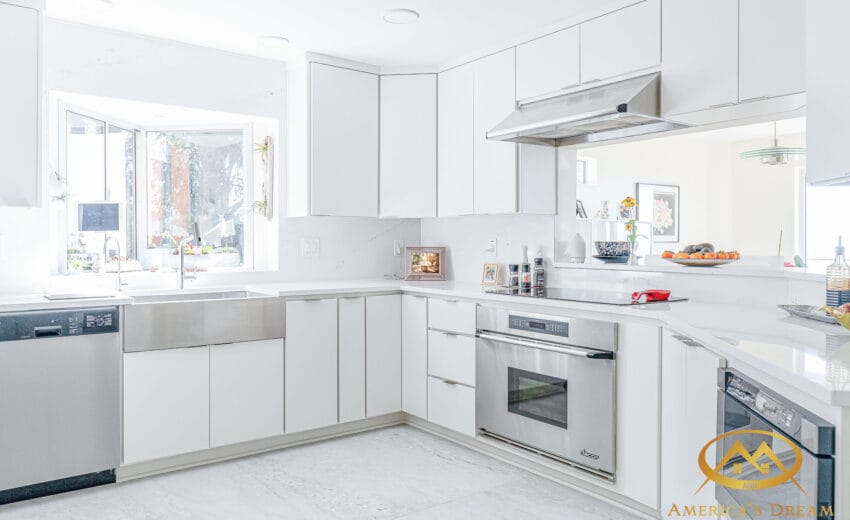
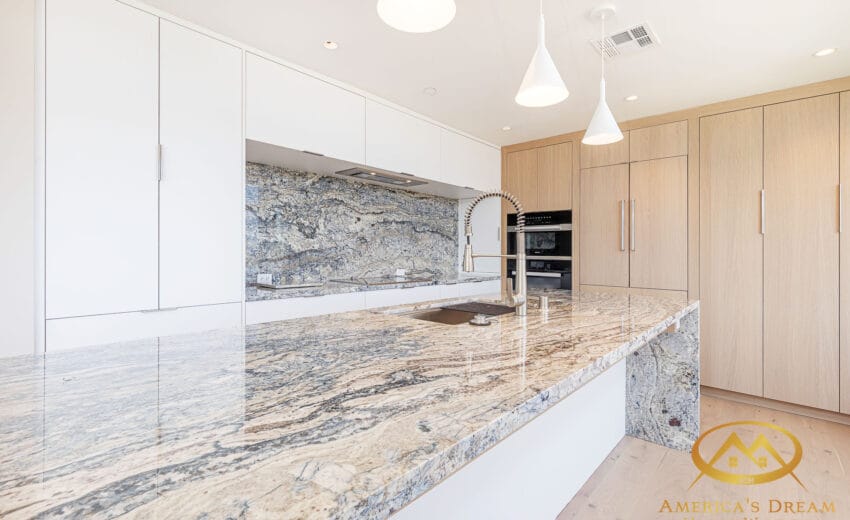
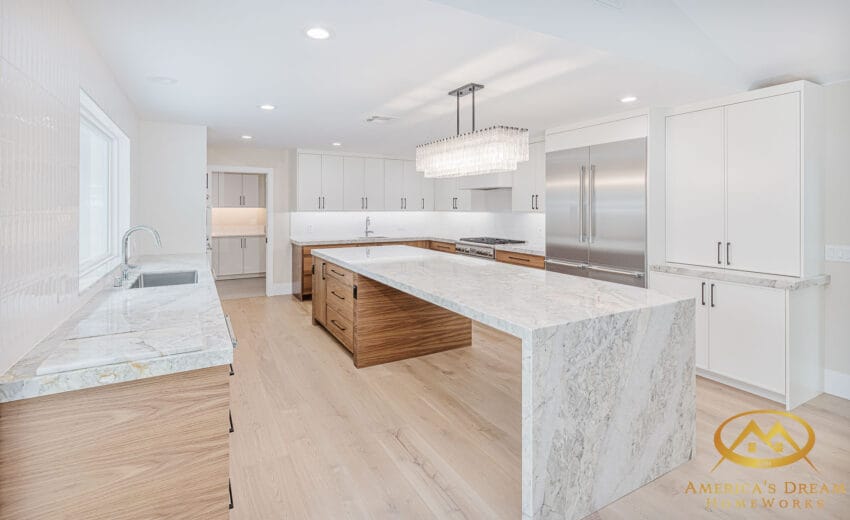
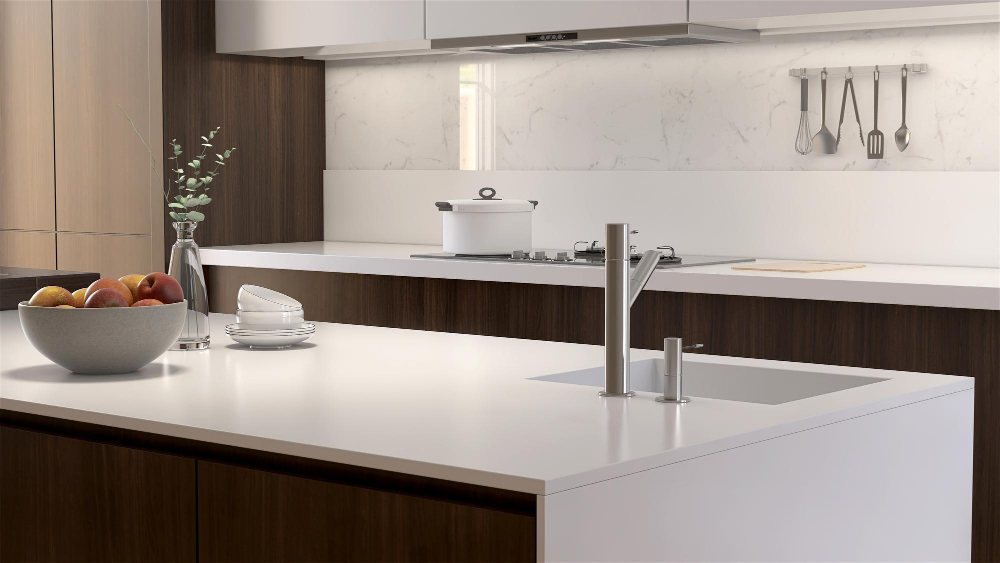
What really sealed the deal for Rachel was seeing how the slimmer profile actually enhanced her kitchen’s contemporary style. She had chosen flat-panel cabinets with clean lines, and the 2cm countertop complemented them perfectly. There’s something about those refined proportions that just works with modern design—it looks intentional rather than bulky. European-inspired kitchens have been doing this for decades, and the look has finally caught on here in a big way.
Before Rachel made her final decision, I shared the one thing I tell every client: installation quality matters more than anything else. I’ve seen expensive 3cm slabs fail because of poor fabrication, and I’ve seen 2cm countertops in busy family kitchens that still look brand new after ten years. A skilled fabricator evaluates cabinet support, calculates overhang dimensions precisely, plans seams so they practically disappear, executes edges with care, and reinforces every cutout. That’s what determines whether your countertop performs beautifully for decades or develops problems down the road.
| Feature | 2cm Quartz | 3cm Quartz |
|---|---|---|
| Thickness | 20 mm (¾ inch) | 30 mm (1¼ inch) |
| Weight | Lighter | Heavier |
| Support | May need additional support | Often requires less support |
| Modern Look | Excellent | Excellent |
| Material Cost | Often lower | Usually higher |
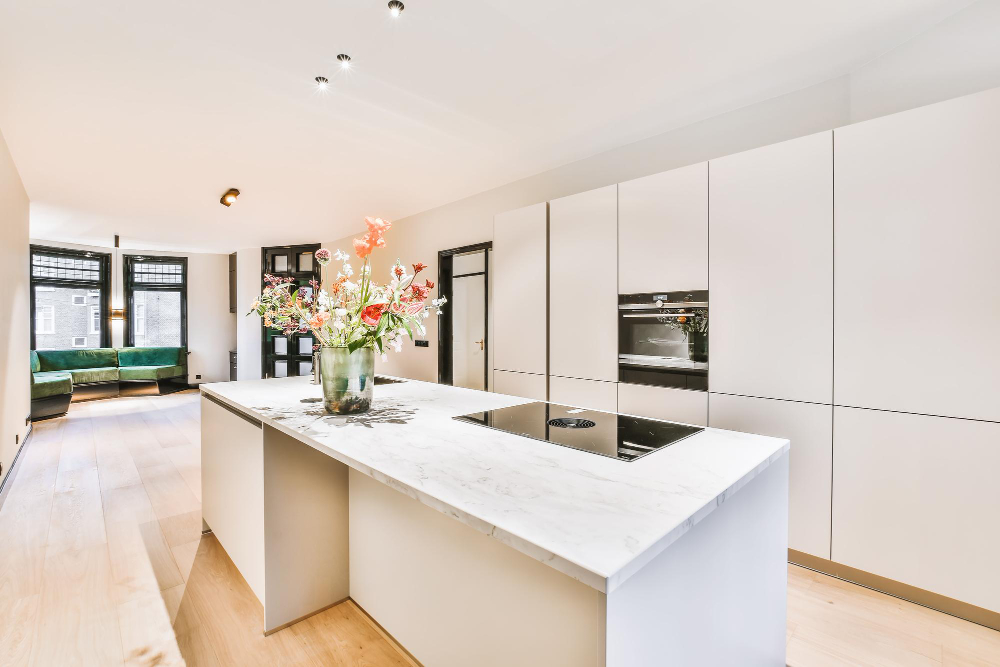
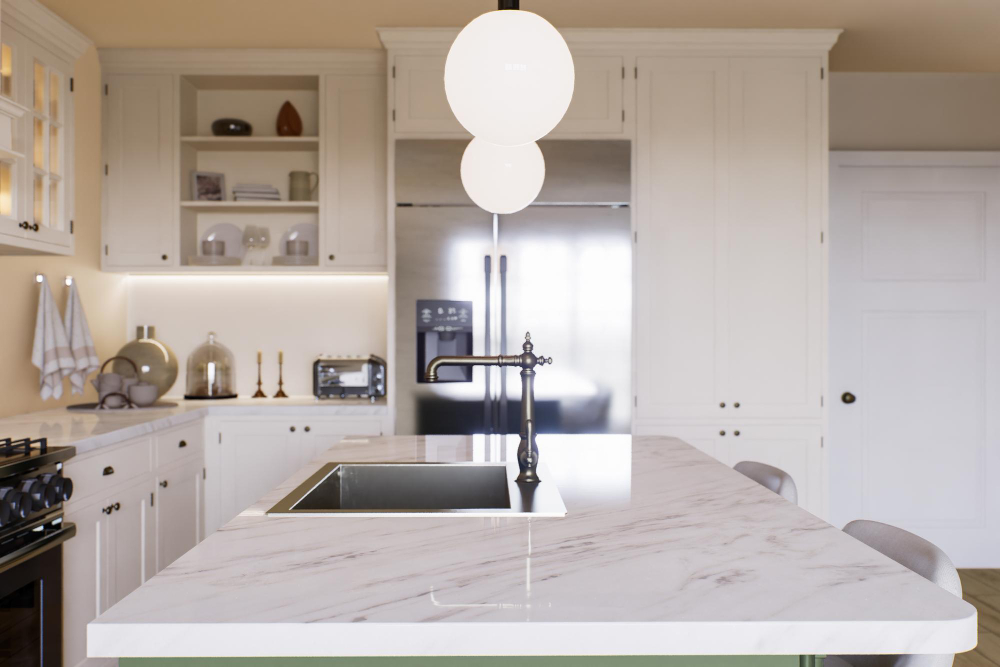
Rachel ended up choosing the 2cm quartz with a mitered edge. A few months after her kitchen was finished, she sent me a photo of her family gathered around the island during a holiday dinner—kids doing homework on one end, appetizers spread across the middle, and not a single worry about whether the countertops could handle it all. That’s the thing about this decision. It’s easy to get lost in technical specs and comparison charts, but at the end of the day, you want a surface that supports the way you actually live.
I’ve also learned over the years that there are some stubborn myths about thinner quartz that deserve to be put to rest. A 2cm countertop is not weak—I’ve seen these surfaces survive everything from dropped mixing bowls to enthusiastic young bakers. It doesn’t look cheaper—a well-executed edge profile creates a premium appearance that even design-savvy guests won’t question. And no, 3cm is not the only option worthy of a kitchen. Both thicknesses are installed in homes across the country every single day. What matters is matching the material to your design preferences, your support system, and the vision you have for your space.
A 2cm quartz countertop offers something that gets overlooked in all the technical discussions: genuine flexibility. It lets you achieve the elegant look you want, delivers the durability your household demands, and gives you options in both appearance and budget that thicker slabs sometimes limit. The right choice comes down to your kitchen’s style, your cabinet design, your installation requirements, and your remodeling goals.
If you’re standing where Rachel stood—unsure which thickness is right for your home—the countertop specialists at America’s Dream HomeWorks can walk you through the same comparison, show you edge profile options in person, and help you select a surface that fits your space and your life. Contact our team today to schedule a consultation and create a countertop that you’ll love coming home to, just like Rachel does.