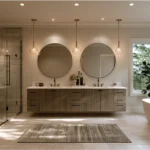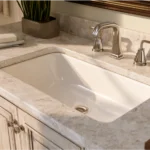
Key Takeaway
A master bathroom remodel typically costs $20,000 to $35,000 for a full remodel within the existing space, $3,000 to $10,000 for a cosmetic refresh, and $25,000 to $80,000 or more for a complete redesign that moves plumbing or walls. Knowing how much to remodel a master bathroom starts with identifying your scope level. Labor alone accounts for 40 to 65 percent of the total, and layout changes are the single biggest cost driver.
Here’s the honest answer: a primary (master) bathroom remodel can’t be priced responsibly from square footage alone. The real number depends on your bathroom size, whether the layout changes, how much wet-area work is involved, the cabinetry and finishes you choose, permits, and whatever existing conditions turn up once the walls open. That’s why the bathroom remodel cost ranges you find online swing so wildly, from a few thousand dollars for a cosmetic refresh to well over $70,000 for a full redesign. Those numbers aren’t contradicting each other. They’re describing different projects.
If you’re a homeowner trying to set a realistic bathroom remodeling budget or sanity-check a quote you’ve already received, this guide walks you through the three scope levels, the factors that actually move the overall project cost, and how to compare estimates so nobody disappears halfway through. When one in-house team handles the whole job, the total project cost is something we can explain plainly instead of guessing at.
Why Online Bathroom Remodel Cost Estimates Vary So Much

Two bathroom remodel estimates aren’t comparable unless they describe the same room, the same scope, the same materials, the same responsibilities, and the same allowances and exclusions. Miss that, and you’re comparing apples to lumber.
Most national cost guides lump very different rooms together. A small guest bathroom, a 100-square-foot primary bath, and a full suite expansion all get folded into one “master bathroom remodels” average. One 2026 source lands between roughly $6,600 and $17,600 for a bathroom renovation, while another puts a full remodel at $25,000 to $80,000. Both can be accurate for the project each one is modeling, and prices vary widely depending on how the job is defined.
The definition of “full remodel” shifts too. Some figures include design, permits, demolition, disposal, custom glass, and premium materials. Others quietly leave those out, which makes the headline number look smaller than the real bathroom remodel cost. Material and labor costs and permit conditions also vary by region, so a national average rarely reflects what a specific city requires.
It helps to know what kind of number you’re looking at. Survey data reports what homeowners say they spent. Modeled resale data, like the Cost vs. Value report, prices a fixed project across many markets. Neither one is the same as an itemized proposal written for your home. Keep that distinction in mind and most of the confusion clears up.
Start With the Scope: The Three Cost Ranges of a Master Bathroom Remodel
Before you worry about dollars, figure out which of these three projects you’re actually planning. The project scope is what sets the price, so this is where every honest estimate begins. These cost ranges track directly to how much work each level involves.
Cosmetic Refresh
Fresh paint, new hardware, a few updated fixtures, better lighting, maybe a new mirror or faucet. Everything stays where it is. No walls move, no plumbing shifts. This is the lightest-touch option, a bit of light construction at most, and it’s the kind of work a confident homeowner might even tackle as a partial diy bathroom project. Nationally it tends to land in the $3,000 to $10,000 range. It’s a good fit when the layout works and the room just looks tired.
Full Remodel Within the Existing Space
This is what most people picture when they say bathroom remodel. You replace the shower or tub, the vanity, the countertop, the flooring, the lighting, and the plumbing fixtures, and you refresh every finish, all without substantially relocating the room’s systems inside the existing space. The toilet stays where the drain is. The shower stays on the same wall. Mid range projects like this commonly run $20,000 to $35,000, because you’re buying new everything and paying for the labor to install it correctly.
Complete Redesign or Full Renovation
Here’s where the big numbers come from. A full renovation moves plumbing systems, walls, doors, or windows. You enlarge the room, build a custom wet area, or add significant electrical work and ventilation. A master bathroom renovation at this level often reaches $25,000 to $80,000 or more, and the reason is simple: relocating systems and making major structural changes pulls in more trades, more framing, more inspections, and more finish repair. When the floor plan genuinely needs major structural work for your family to use the space, this can be a major investment worth every dollar. It’s just the most involved path, and luxury remodels with custom elements sit at the top of this band.
What Factors Affect the Overall Cost of a Master Bathroom Remodel?

Within any scope level, a handful of decisions do most of the work on your overall cost. Here are the ones that matter most:
- Bathroom size and total tiled surface area. More square footage and more tile mean more material and more labor hours. A compact powder room is a very different number than a large suite.
- Cosmetic update versus full demolition. Tearing an old bathroom down to the studs costs more than working around what stays.
- Keeping or changing the existing layout. Moving drains, supply lines, walls, doors, or windows is one of the biggest cost multipliers there is, and complex layouts raise it further.
- Shower and tub configuration. A prefabricated shower installs quickly. A custom-tiled walk in shower with a bathtub replacement or a separate soaking tub is a different project entirely, and swapping out a heavy cast iron tub adds its own labor.
- Vanity, storage, and cabinetry. Standard-size cabinets cost less than custom builds. Our DreamLine Custom Cabinetry gives you a fitted, made-in-America option when the stock sizes don’t work for your space.
- Countertop, tile, glass, fixture, and lighting selections. Natural stone and other high end materials raise the number, and material quality shows up directly in the total. A frameless glass enclosure costs more than a basic one, and luxury features like heated floors add further.
- Electrical wiring, ventilation, and code upgrades. Older systems, new circuits, and proper exhaust all add scope and installation complexity, and current building codes often require them.
- Permits and inspections. Required work that belongs in any complete estimate.
- Site preparation and concealed damage. Water-rotted subfloor or outdated plumbing found after demolition is a common surprise.
One thing worth sitting with: layout changes and wet-area work affect far more than the materials you see. Moving a shower adds demolition, framing, new plumbing, waterproofing, electrical work, inspections, and finish repair. The nationwide per square foot range of roughly $70 to $250 exists almost entirely because of choices like these and the project complexity behind them.
Bathroom Remodel Cost Breakdown: Labor and the Work You Don’t See
Labor costs plus site work are usually the largest share of a bathroom budget, often somewhere between 40% and 65% of the total. That surprises people who expect the tile or the tub to be the big line. It isn’t.
The single most expensive element is typically the custom shower or wet area, where waterproofing, tile, glass, and plumbing all converge in one tight space. Shower installations alone can range from a few hundred dollars for a simple swap to five figures for a fully custom build. Much of what you’re paying for lives behind the wall: the membrane that keeps water out of your framing, the blocking that holds your fixtures, the rough plumbing that never shows once the tile goes up. That work protects your home for decades, and it’s the part a cut-rate bid tends to shortchange.
When one team of licensed professionals handles demolition through final finish, that labor isn’t marked up through a chain of separate trades each taking their cut. You’re paying for the work, not for the handoffs. That’s a big part of why the in-house model matters on a bathroom remodel this detail-heavy, and why having a single general contractor stay accountable from start to finish keeps the bathroom remodel cost breakdown honest.
What Should a Complete Master Bathroom Estimate Include?
A real estimate reads like a plan for your whole project, not a price tag on a few visible items. Hold any quote you receive against this list:
- Design and field measurements
- Written drawings or a layout plan
- Demolition and debris removal
- Jobsite protection for the rest of your home
- Permit responsibility and fees
- Framing and subfloor repairs
- Rough plumbing and electrical wiring
- Ventilation that meets code
- A complete waterproofing system
- Wall and floor preparation
- Shower, tub, toilet, and faucets
- Vanity, cabinetry, storage, double vanity if planned, and countertop
- Tile and flooring
- Shower enclosure or glass shower doors
- Lighting fixtures, mirrors, medicine cabinet, hardware, and accessories
- Painting
- Inspections, cleanup, and a final walkthrough
- Allowances, exclusions, and warranties spelled out in writing
You’ll notice the items that make a quote look cheap are often the ones missing from it. Permits can run $100 to $1,500 depending on the city. Demolition and disposal add real cost. A bid that leaves these out isn’t a better deal, it’s an incomplete picture of the same job.
Additional Costs: Is It Less Expensive to Keep the Same Bathroom Layout?
Usually, yes. Keeping your drains, supply lines, walls, doorways, and windows where they are is the clearest lever you have to control your total remodeling budget. It pulls fewer trades into the project, cuts framing, reduces the number of inspections, and spares you a lot of finish repair after the plumbing’s done. The additional costs come when systems have to move.
Toilet moving or relocating a shower to the opposite wall triggers new rough plumbing, new waterproofing, and more demolition than people expect. If the existing floor plan works for how your family actually uses the room, staying put is almost always the smarter budget move and keeps your overall project cost in check.
That said, don’t keep a bad layout just to save money. If the room is cramped, the shower is in the wrong spot, or the flow fights you every morning, the redesign can be worth the extra investment. The goal is a bathroom you love for years, not just a cheaper invoice today.
Where You Can Control Cost, and Where You Shouldn’t Cut Corners
Some savings are smart. Others cost you more down the road. Knowing the difference keeps your budget honest, even on a tight budget.
Reasonable Places to Simplify
- Keep the existing footprint and plumbing locations.
- Choose standard-size products where they fit your space well, and consider low flow toilets that meet code while trimming water bills.
- Limit decorative or high-end tile and specialty finishes to focal areas like a shower niche or accent wall.
- Prioritize the features your family actually uses every day.
- Finalize every selection before demolition starts, so you avoid change orders later.
Where Cutting Corners Backfires
- Waterproofing. Skimp here and you’re inviting rot and mold into your framing.
- Ventilation. A proper exhaust fan protects your finishes and your air.
- Electrical safety. Not the place to improvise.
- Plumbing. Hidden leaks are expensive mistakes.
- Subfloor and water-damage repairs. Fix what you find, don’t tile over it.
- Permits and inspections. They protect your investment and your resale.
Set aside a contingency of 10% to 20% for the surprises demolition tends to reveal, like water damage or outdated wiring. In homes built before 1978, lead-safe practices matter during demolition, which is why we’re an EPA Lead-Safe Certified firm. Choosing high quality materials where they count and restraint where they don’t is how you get a premium result at a fair price.
Does a Master Bathroom Remodel Add Home Value?
It can, and mid range master bathroom remodels tend to return a higher share than a high end renovation. National modeled data shows midrange bathroom projects recouping around 80% of cost at resale, universal-design work around 61%, and upscale remodels closer to 42%. Keep in mind those are fixed-scope resale models across many markets, not a quote for your specific home, so treat them as direction rather than a promise.
Resale is only half the story. The 2026 Houzz bathroom study of more than 1,600 homeowners found that 50% spend more time in their bathroom after renovating. The qualities people called most relaxing were a clean space at 76%, a spacious shower at 71%, and organized storage at 67%. About 27% listed resale among their reasons for remodeling at all. The real home value shows up twice: in the number a future buyer sees, and in the calmer, better-organized morning you get the day the project wraps. A well-scoped bathroom renovation improves both your home value and your daily life.
What Concord Homeowners Should Know About Permits and California Contract Rules
National cost guides rarely cover the rules that actually protect you. If you’re remodeling in California, these matter.
Permits in Concord
The City of Concord treats bathroom remodels broadly as permitted work, not only when plumbing moves. The city’s published permit bulletin also calls out new and replacement shower or tub enclosures, with separate guidance for plumbing, electrical, and exhaust-fan work. Confirm your exact scope through the City of Concord Permit Center, and build permit review into your preconstruction schedule so it doesn’t surprise you mid-project. The governing code right now is the 2025 California Building Standards Code, effective January 1, 2026, plus the city’s local amendments.
California Contract Protections
California requires a written contract for any home improvement project over $500. Your down payment generally can’t exceed $1,000 or 10% of the contract price, whichever is less, and progress payments can’t exceed the value of work already performed. Any change to the scope should be documented with a written change order, so there are no verbal surprises on the final bill. Always verify a professional contractor’s CSLB license before you sign.
A complete estimate also has to account for code items like CALGreen water-efficiency limits (toilets at no more than 1.28 gallons per flush, showerheads capped at 1.8 gallons per minute, lavatory faucets at 1.2 gallons per minute) and required bathroom exhaust, generally 50 cfm demand-controlled or 20 cfm continuous. For pre-1978 homes, lead-safe work practices apply during demolition. We carry CSLB License #853669 and hold EPA Lead-Safe Certification, so these aren’t afterthoughts on our jobs.
How Long Does a Master Bathroom Remodel Take?
The timeline you really care about has two parts most quotes blur together: the preconstruction work and the actual construction. A stated “construction duration” usually leaves out design, ordering, and permits, which is why online timelines vary so much.
Here’s how the full project breaks down:
- Consultation and field measurements
- Design and material selections
- Permit review with the city
- Material procurement and delivery
- Active construction
- Inspections and final walkthrough
Plan on several weeks depending on scope. A cosmetic refresh moves fast. A full remodel with custom cabinetry and a tiled shower takes longer, mostly because of selections, ordering, and permit review happening before any demolition begins. Nailing down your choices early is the best way to keep the schedule tight.
How to Compare Bathroom Remodeling Estimates Fairly

The scariest part of a bathroom renovation isn’t the cost. It’s the contractor who vanishes or quietly hands your job to someone else. A fair comparison protects you from that. When you line up bids, check that each one spells out:
- Identical scope, so you’re comparing the same project
- Exact products or realistic allowances, not vague placeholders
- Who’s responsible for pulling permits
- The waterproofing method behind the walls
- Who supplies the materials, you or the contractor
- What happens if concealed damage is found after demolition
- The change-order process for any mid-project adjustments
- The payment schedule
- Cleanup and debris removal
- The warranty on labor and materials
- The contractor’s license and insurance
The lowest number often wins by leaving things out. When one company holds a single contract for the entire project, there’s no gap for your job to fall into and no second contractor to chase. That’s the accountability you’re really shopping for.
One Team, One Scope, One Point of Accountability
We’ll never send you searching for another contractor to finish what we started. That’s the whole idea behind our design-build model, and it’s why so many homeowners pick us for a project this involved.
America’s Dream HomeWorks has been family-owned since 2001, and we’ve transformed more than 19,000 homes. Design, DreamLine Custom Cabinetry, in-house stone fabrication, and installation all happen under one roof, so the person who designs your bathroom works with the people who build it. We hold CSLB License #853669, we’re EPA Lead-Safe Certified, and we’re an A+ BBB Accredited Business, which answers the first question most homeowners have: will this company show up and finish the job right. Our 24-month labor warranty on remodels covers the work after we leave, and DreamLine Custom Cabinetry carries a limited lifetime warranty, so the materials you chose are backed for the long haul. Every one of those credentials maps to something you were already worried about.
Frequently Asked Questions
Can I renovate a bathroom for $10,000?
Is $5,000 enough to remodel a master bathroom?
What is the 30% rule in remodeling?
How much to remodel a master bathroom versus a guest bathroom?
Is a master bath remodel worth it?
Should I replace my tub with a walk-in shower?
Ready to See What Your Dream Bathroom Will Actually Cost?
Your bathroom should be the easy part of your day, not the frustrating one. The only way to get a number you can trust is to look at your actual room. Schedule a free consultation and we’ll review your space, your goals, your layout, and your selections, then prepare a clear, project-specific estimate with a detailed scope so you can see exactly what’s included. No obligation, no pressure.
Get your free estimate, schedule a free consultation online, or call us at (916) 701-9660 when you’re ready to start planning.