Key Takeaway
The average kitchen remodel cost ranges from roughly $14,597 to $65,000 or more depending on scope, with minor remodels typically falling between $10,000 and $20,000 and major renovations reaching $65,000 to $130,000-plus. Cabinets alone consume 29 to 40 percent of the budget, making them the single biggest cost driver. National averages blend radically different project types, so your actual number depends on whether your layout changes, which cabinet strategy you choose, and local labor rates in your area.
There isn’t one honest average kitchen remodel cost. Published national benchmarks land anywhere from roughly $15,000 to well over $50,000, and some project datasets report average kitchen remodel costs spanning about $14,597 to $41,509, because those numbers blend a countertop-and-paint refresh with a full transformation that strips the room to the studs and moves plumbing. Minor remodels commonly cost between $10,000 and $20,000 in national guides, while major remodels commonly cost $20,000 to $65,000. What you actually spend comes down to scope.
If you’re a homeowner in Concord or greater Northern California trying to set a realistic kitchen remodel price before you talk to anyone, this walks you through how to read those averages, what actually drives the total cost, and what a complete estimate should include. Every dollar figure below is national industry data from third-party sources. None of it is our pricing.
Why do kitchen remodel costs vary so much from one source to another?

Three things explain almost all of the disagreement about what a new kitchen costs. Published figures vary based on who was surveyed and how the data was gathered.
Average versus median. One national dataset builds its cost figures from 13,100 verified projects and reports averages, which get pulled upward by a handful of very large jobs. Houzz reports medians instead, and does not adjust its spending figures for inflation. Those are different measurements of different homeowner populations.
Completed projects versus modeled ones. The annual Cost vs. Value report prices a fixed, tightly specified kitchen across 119 markets so resale value can be measured against cost. It’s useful for comparison, and it isn’t the average of real kitchens people are building.
National benchmark versus local estimate. NKBA projects roughly a $228 billion U.S. kitchen and bath market in 2026, with price growth outpacing project volume. Material costs and local labor rates move unevenly by geographic location, so a national renovation average can sit well below what the same scope costs along the Sacramento and Bay Area corridor.
The “average” kitchen remodel isn’t one project. It’s dozens of very different projects averaged together, and the cost spread between them is enormous.
What counts as cosmetic updates, a mid range remodel, or a major kitchen renovation?
The cleanest objective dividing line comes from Houzz: a major remodel replaces at least all cabinets and all appliances. Anything short of that is a minor project, no matter how good it looks when it’s finished. It also helps to know that “renovation” usually describes cosmetic updates with no structural changes, while “remodel” implies the structure or layout moves. Smaller refreshes and major renovations get averaged together in most cost guides, which is part of why the published ranges look so wide.
| Tier | What’s actually replaced or moved | National cost range (third-party guides) |
|---|---|---|
| Cosmetic updates | Paint, hardware, fixtures, sometimes countertops. Cabinet boxes stay. | $10,000–$25,000 |
| Refacing cabinets plus surface work | New doors, drawer fronts and veneer on sound boxes, new countertops and backsplash | $10,000–$20,000 (minor tier) |
| Mid range to major replacement, same footprint | Brand new cabinets and appliances, counters, new flooring, lighting | $20,000–$65,000 |
| Layout-changing or structural | Walls removed, moving plumbing and gas lines, footprint expanded | $60,000–$100,000+, structural work can exceed $130,000 |
Figuring out which row you’re in is the first real step toward a kitchen remodel budget you can trust. Two neighbors can both say they want a mid range remodel and be describing projects that cost twice as much apart.
Most expensive components of a kitchen remodel: cabinets, labor expenses, countertops
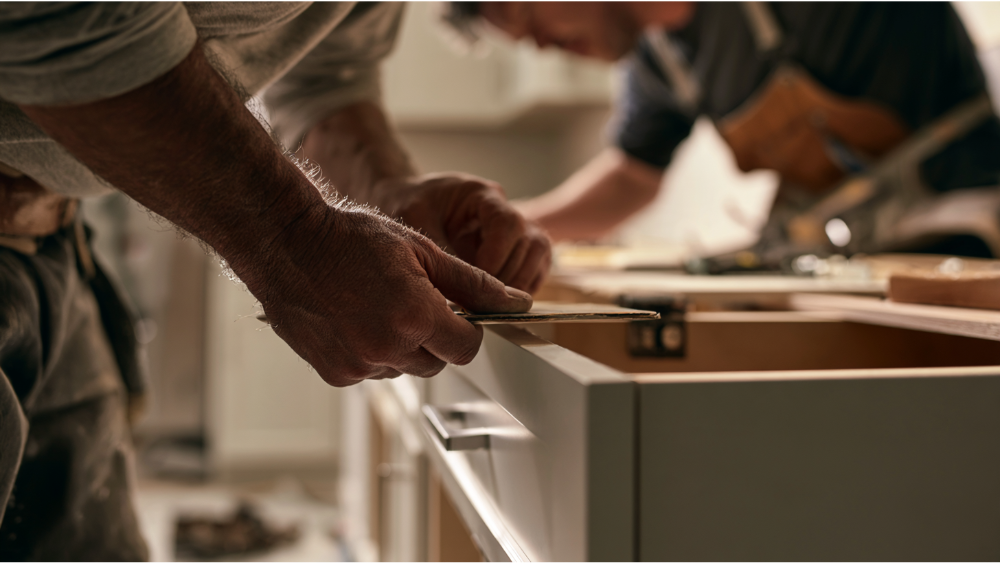
Cabinets, every time. Published cost breakdowns put cabinetry at 29 to 40 percent of the total budget, followed by labor expenses at 20 to 35 percent and countertops at roughly 10 to 15 percent.
- Cabinets: 29–40% of budget. National pricing spans a wide set of price points, from about $100 to $1,200 per linear foot depending on whether you choose stock, semi custom, or custom cabinets.
- Labor costs: 20–35%, driven by local labor rates and how many trades the job touches.
- Countertops: roughly 10–15%, commonly costing $1,870–$4,400 installed.
- Appliances: 51% of renovating homeowners replace all of them rather than keeping their existing appliances, which makes appliances a major cost line rather than a small one. Top tier appliances push that line higher still.
Why the expensive components swing so widely per linear foot
Door style, box construction, premium finishes, and total linear footage all compound. Custom cabinets at 20 linear feet and stock cabinets at 20 linear feet are not the same project, and the cost gap between them can be larger than an entire countertop budget. Our DreamLine Custom Cabinetry line and in-house stone fabrication shop exist so those decisions stay under one roof instead of bouncing between vendors, and so the person taking the precise measurements is the person building the boxes.
Houzz data also shows where scope, and therefore cost, quietly grows: 91 percent of homeowners upgrade countertops, 84 percent replace cabinets, 78 percent update lighting, and 65 percent install new flooring. And 58 percent add or change an island. A kitchen island touches cabinetry, counters, electrical work, and sometimes plumbing, so it almost never stays a single line item.
Why kitchen remodel cost per square foot can be misleading
Published cost per square foot ranges run roughly $75 to $250, which sounds precise and isn’t. A small kitchen still needs demo, electrical, plumbing, cabinets, counters, flooring, and finish work. Those fixed costs don’t shrink proportionally when the room does, so the cost per square foot on a tight galley can look alarming next to a large kitchen with a simpler scope. Kitchen size matters, but scope matters more.
Cabinet density, the appliance package, and any wall or utility work distort the math further. Houzz found half of renovated kitchens measure 200 square feet or more and 38 percent fall between 100 and 199 square feet, and its 250 square foot “larger kitchen” line is a study definition, not an industry standard. Use cost per square foot as a sanity check on a proposal, never as a substitute for real kitchen remodel costs on your own floor plan.
What factors have the biggest effect on your kitchen remodel price?
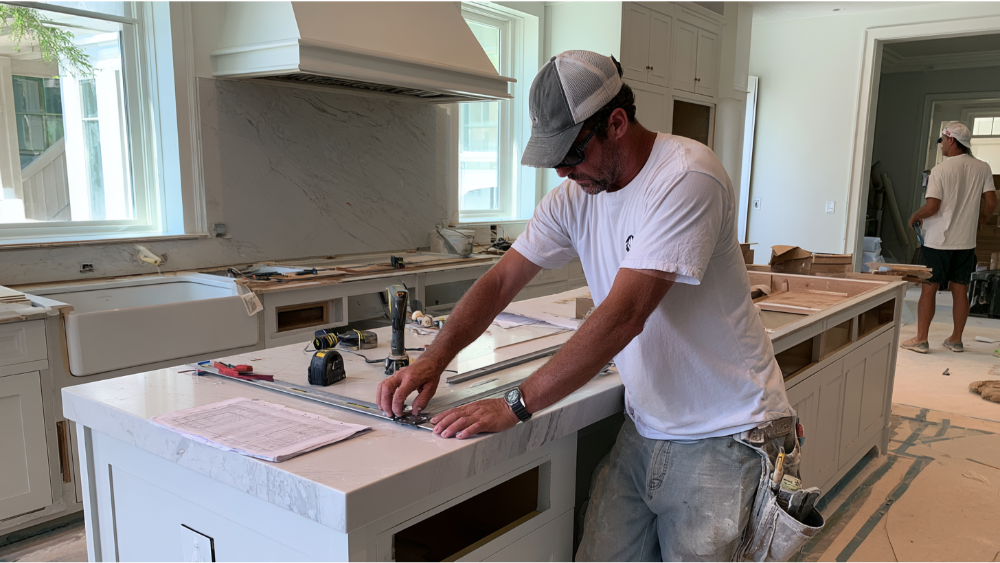
Several factors do most of the work, and they compound on each other.
- Cabinet strategy. Reface sound boxes, replace everything with new cabinets, or go custom. This single decision moves the total project cost more than any other.
- Footprint versus layout changes. Houzz reports 68 percent of renovated kitchens stay about the same size while 32 percent expand. Expansion adds design, structural, and permitting costs.
- Moving plumbing and gas lines. Relocating a sink or range means new supply, drain, venting, and often floor or wall repair. New sinks and faucets are minor by comparison. Moving plumbing across the room is one of the fastest ways to add cost to a renovation.
- Electrical systems. Modern kitchens need dedicated circuits, and older panels sometimes need capacity added before anything else can happen.
- Major structural changes. Removing walls usually means a beam, engineering, and a permit, and it’s the point where costs jump a full tier.
- Countertop material and fabrication. Quartz, Dekton, Cambria, Silestone, and natural stone all template and cut differently, and premium materials carry higher fabrication and installation costs along with a higher slab price.
- Appliances and ventilation. A larger hood over a pro style range often means new ducting routed through walls or the roof.
- New flooring, lighting, and tile backsplash. Individually modest, collectively significant.
- Permits and design. Plans, review, and inspections are real cost line items.
Plenty of Concord-area homes were built before 1978, and outdated wiring or tired supply lines tend to surface the day the drywall comes down. Opening walls in an older house is where surprise costs live, which is why scope, not square footage, sets your number.
What should a new kitchen estimate include?
Most published average kitchen remodel costs never tell you whether permits, design, or appliances sit inside the figure. Your estimate should. Look for every one of these in writing:
- Design and drawings
- Plans, required permits, and inspections, with who is responsible for pulling them
- Demolition and debris removal
- Cabinets and cabinet installation costs
- Countertops, templating, and fabrication
- Appliances, or a clearly stated allowance
- Electrical, plumbing, and ventilation
- New flooring, tile backsplash, and paint
- Delivery, storage, and handling of materials
- Final cleanup
- Warranty terms
- Written exclusions and allowances
- The change-order procedure
If a proposal is one number on one page, you have nothing to compare it against and no way to tell which costs were left out.
How to compare kitchen renovation proposals and control your budget

Comparing proposals: match scope line for line before you look at totals. Two kitchen renovation bids can differ by tens of thousands and still describe the same room. Verify product specs by brand and model, not by adjective. Read the exclusions. Check whether allowances are realistic for what you actually picked. If an interior designer is involved, confirm whether that fee sits inside the total or outside it. Confirm who pulls permits, and require that every change be documented in a signed written change order. Side-by-side detail is what lets you make informed decisions instead of guesses.
Protecting the budget: keep the existing footprint where it genuinely works. Consider refacing cabinets if your boxes are sound, since national guides put the savings at 30 to 50 percent against the cost of full replacement. That’s a different scope, not a lesser one. Finalize every selection before your project starts, hold a contingency of 10 to 20 percent, and choose durable over trendy. Spend on the surfaces your family touches every day and skip luxury materials where nobody will see them. Many homeowners use 5 to 15 percent of home value as a starting frame for realistic expectations, and energy efficient appliances are worth pricing while you’re already replacing them.
The Houzz overrun data backs this up: among homeowners who went over budget, 52 percent said products or services cost more than expected, 35 percent moved up to high end materials mid-stream, 32 percent hit unexpected complexity, and 31 percent changed the scope or design. Our 20,000 square foot showroom in North Highlands and our kitchen visualizer tool exist so you can compare materials and lock those selections in early, when changing your mind is free.
Kitchen remodeling in Concord, California: permits, contracts, and older homes
The City of Concord lists kitchen remodels as work requiring a permit. Requirements depend on scope and on the building codes that apply to structural, electrical, mechanical, or plumbing work, so check current rules and permit costs through the city’s Project Pal and Permit Portal rather than relying on a national article for fees.
California gives you real protections before money changes hands. The CSLB requires a written contract for home improvement work over $500, covering scope, materials, payment schedule, permits, and completion date. Your down payment cannot exceed $1,000 or 10 percent of the contract price, whichever is less. Progress payments cannot exceed the value of work completed or materials delivered. Price or scope changes require a signed change order before the work happens.
Verify any contractor’s license at the CSLB. Ours is #853669. We’re also an EPA Lead-Safe Certified Firm, which matters here: the EPA’s Renovation, Repair and Painting Rule applies to pre-1978 housing, minor-repair exemptions are narrow (about 6 square feet interior per room, 20 square feet exterior), and demolition of painted surfaces is covered regardless of size. A local estimate built on your actual kitchen will always tell you more about real kitchen remodel costs than any national average.
How long does a kitchen remodel take?
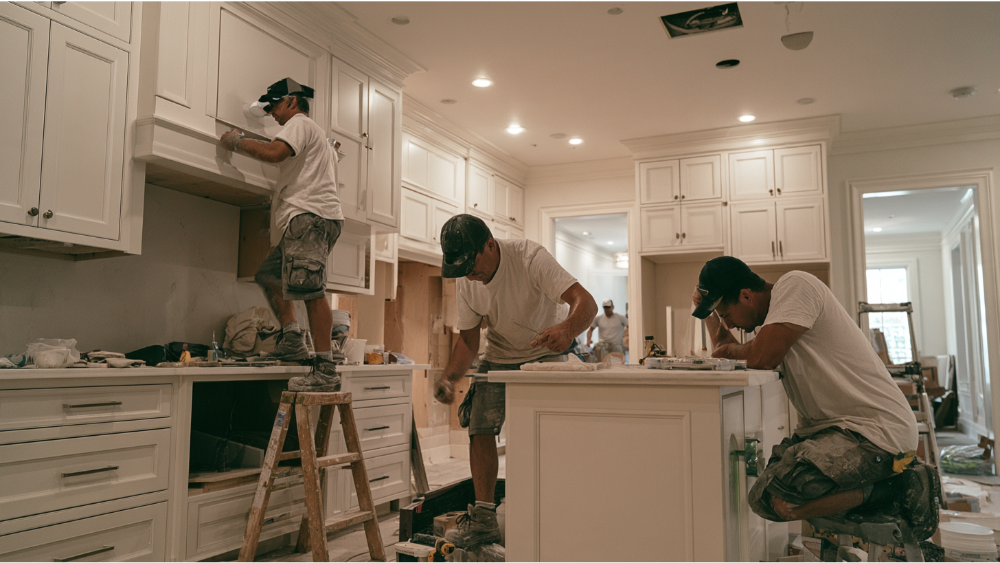
Houzz found kitchens carry the longest overall timeline of any project category, with an average planning period of 9.5 months and an average construction period of 5.8 months. Those are national survey averages across thousands of homeowners, not a commitment for any one kitchen renovation.
Most of that planning stretch is selections and lead times, not construction. Which is the practical argument for deciding on cabinets, stone, and appliances early: it protects your schedule and your budget at the same time.
One team, one scope: how our in-house design-build model protects your kitchen remodel budget
National averages start the conversation. A complete scope and one accountable team finish it.
Design, permitting, procurement, DreamLine Custom Cabinetry, stone fabrication, and installation all happen in-house here, under one roof. That matters for your kitchen remodel costs because the handoff gaps between a designer, a cabinet vendor, a stone shop, and a general contractor are exactly where rework and disputed change orders come from. From the day your old kitchen comes out to the day you cook in the new one, the same team answers for it. We’ll never send you looking for another contractor to finish what we started.
Family-owned since 2001. More than 19,000 homeowners served. CSLB #853669, EPA Lead-Safe Certified, A+ BBB Accredited, with a 24-month labor warranty on all remodels and a limited lifetime warranty on DreamLine Custom Cabinetry.
Ready for a real number instead of a national range, and a kitchen built around your daily life? Schedule a Free Consultation, call (916) 701-9660, or visit our North Highlands showroom to see and touch the materials before you commit to anything.
Frequently Asked Questions
What is a realistic budget for a kitchen remodel?
A common planning frame is 5 to 15 percent of your home’s value, then adjust by scope tier. A same-footprint refresh sits at the low end of that cost range, while a layout change with all new cabinets and appliances sits at the high end.
How much does a kitchen remodel cost per square foot?
National guides put cost per square foot at roughly $75 to $250. Treat it as a rough check, since a 120 square foot kitchen carries nearly the same fixed labor costs as one twice its size.
Can you redo a kitchen for $5,000?
You can fund cosmetic updates: paint, hardware, light fixtures, a faucet, possibly countertops in a very small kitchen. That’s a refresh, not a complete remodel, and it won’t include new cabinets or appliances.
Is $30,000 enough for a new kitchen?
Nationally, $30,000 lands in the minor-to-lower-major tier. Whether it covers your new kitchen depends mostly on your cabinet strategy and whether the layout moves.
What are the most expensive components of a kitchen remodel?
Cabinets, at 29 to 40 percent of the typical budget, followed by labor costs at 20 to 35 percent. Countertops usually come third at roughly 10 to 15 percent.