Key Takeaway
In a Cambria vs Silestone countertop comparison, both brands deliver nonporous, low-maintenance quartz that performs similarly in everyday kitchen and bathroom use. Cambria’s key advantages are American manufacturing in Le Sueur, Minnesota, a broader finish selection, and a transferable full lifetime warranty requiring no registration. Silestone stands out for its low-silica HybriQ+ composition, minimum 20% recycled content, and a 25-year residential warranty. The right choice comes down to the design you want, slab layout, and who fabricates and installs it.
Cambria and Silestone are both durable, nonporous, low-maintenance quartz countertops built for indoor kitchens and bathrooms, and in daily use these two brands perform similarly more often than most comparison articles admit. Cambria’s edge is American manufacturing, a very broad design and finish selection, and a transferable full lifetime warranty. Silestone’s edge is its HybriQ+ low-silica composition, recycled content, and a 25-year registered warranty. The right brand for you comes down to the design you love, the slab layout, the warranty fine print, and who fabricates and installs it.
If you’ve narrowed your countertops down to these two quartz brands and want a straight answer before you approve a slab, here’s how they actually differ. We fabricate both in-house at our own stone shop, so this comes from the shop floor rather than a brochure.
Cambria vs Silestone countertop comparison at a glance

Here’s the short version of what separates these two premium quartz brands. Homeowners search this as Cambria vs Silestone and as Silestone vs Cambria, and the answer lands in the same place either way.
| Cambria | Silestone | |
|---|---|---|
| Best reason to choose | American-made, widest design and texture range | Low-silica HybriQ+ composition, recycled content |
| What it’s made of | Quartz, binder, pigments | Low-silica minerals, recycled materials, binder |
| Where it’s manufactured | Manufactured in Le Sueur, Minnesota | Manufactured in Almeria, Spain (Cosentino) |
| Warranty | Full lifetime, transferable | 25 years, residential |
| Registration required | No | Yes, within 6 months |
| Sealing | Never | Never |
| Heat | Trivet required | Trivet required |
| Slab formats | Standard, jumbo, select super-jumbo | Standard, jumbo |
| Finishes | Polished, Matte, Satin, Luxe, plus textures | Polished, Suede, Volcano |
| Indoor vs outdoor | Indoor only | Indoor only |
Now here’s what those rows actually mean for your own kitchen countertops.
What about other quartz brands like Corian Quartz?
Most homeowners we meet arrive comparing three brands at once, often Cambria, Silestone, and a line such as Corian Quartz. The same four questions sort out any engineered stone surface: what is it made of right now, is the design you want actually available in your market, what does the warranty exclude, and who is cutting and setting it. Use that framework on any quartz countertop you’re shown, whatever brand is on the label.
What are Cambria quartz and Silestone quartz actually made of?
The “both are about 93% quartz” line in older articles no longer describes either product accurately. Engineered quartz surfaces are crushed mineral content bound with polymer resins and pigments, then pressed and cured. That’s why a quartz countertop is nonporous and never needs sealing, and also why neither brand is heat-proof. Hold onto that, because it explains almost everything below.
Cambria quartz countertops: quartz, binder, and pigment
Cambria’s own Health Product Declaration describes the finished surface as quartz, binder, and pigments. Its “pure natural quartz” language refers to the quartz it sources, not a claim that the finished slab is resin-free, and Cambria doesn’t publish a percentage per current design, so treat the old 93% figure as history rather than a spec. Cambria is family owned, its slabs are manufactured in Le Sueur, Minnesota, and the company states that its quartz products comply with Build America, Buy America and Buy American Act requirements. For some buyers, American manufacturing settles the question by itself, and the transferable warranty is an added bonus.
Silestone: a low-silica mineral surface with HybriQ+
Silestone’s composition has changed. Cosentino now markets it as a low-silica mineral surface made with premium minerals and recycled materials, and every current color carries a maximum crystalline silica content category of either 40% or 10%. The 10% tier is Silestone XM, and Cosentino reports roughly a third of the current color portfolio now falls into it, a proportion that keeps shifting as collections change. Published HybriQ+ figures include a minimum of 20% recycled material, 99% reused process water, and slabs manufactured with 100% renewable electrical energy. Silestone is produced in Almeria, Spain.
Which quartz countertop is more durable in a real family kitchen?
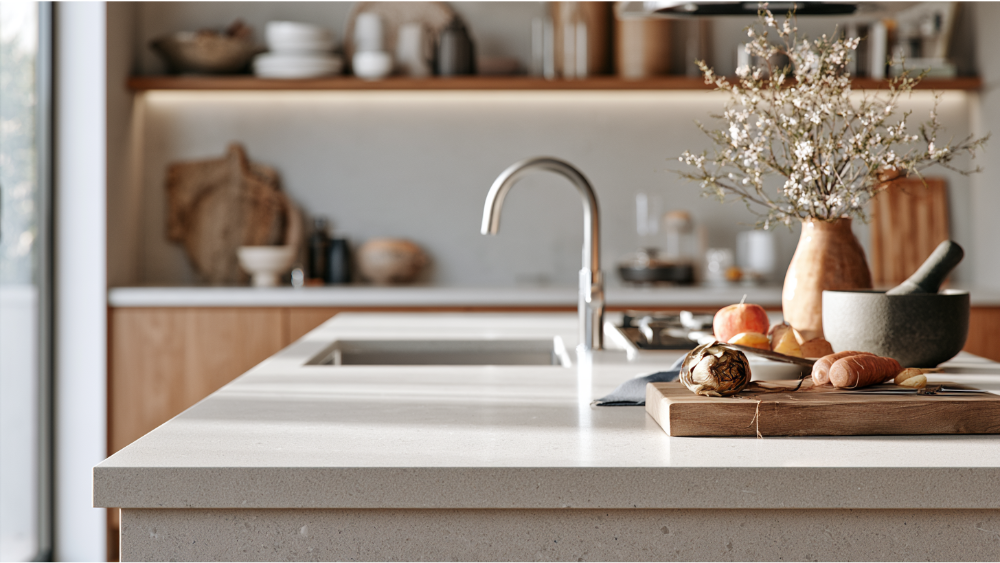
Resistant is not proof. There’s no current independent head-to-head test that makes one of these brands categorically tougher in normal residential use, and anyone who tells you otherwise is guessing. Both outperform most porous natural stone on stain resistance, because both are effectively nonporous. These are both excellent premium quartz brands, and the quality differences show up in color consistency and finish character, not in some dramatic durability gap.
Stains and everyday spills
Red wine, coffee, olive oil, and lemon juice don’t soak into either surface the way they can into unsealed granite or marble. Both are stain resistant rather than stainproof, and the real risk isn’t absorption, it’s chemical dulling. Both brands warn against bleach, oven cleaner, drain cleaner, and abrasive pads, which can permanently flatten the finish in a spot you’ll notice forever. Cosentino also points to built-in hygienic properties in current Silestone as part of the surface itself.
Scratches, chips, and cracks
The quartz mineral itself sits at 7 on the Mohs scale, which is why both shrug off normal knife contact, and both manufacturers still tell you to use a cutting board. Cambria acknowledges that all stone can be damaged by force and that edges around sinks and dishwashers can chip when struck. Cosentino excludes cracks caused by external force, inadequate support, structural movement, improper installation, and thermal shock. That exclusion list is the tell. The failures we get called about almost never trace back to the brand on the slab. Silestone and Cambria break in the same places: support under the overhang, a seam in the wrong place, or a cutout cut too tight.
Can you put hot pans on Cambria or Silestone countertops?
No. Use a trivet or an insulated hot pad with either one. Cambria states plainly that its product is not heat-proof and excludes damage from direct or sustained heat, rapid temperature change, and thermal shock. Cosentino advises against setting hot cookware or heat-generating appliances directly on Silestone and excludes thermal-shock cracking from coverage. Skip the temperature charts you’ll see online. If real heat tolerance is your priority, ask us about Dekton during your consultation.
Do both Cambria and Silestone countertops need sealing?
No. Neither quartz countertop needs the recurring sealing that many natural stone surfaces require, and neither needs polishing. Routine care for both is warm water, a soft cloth, and a mild or neutral soap when you need it. Both brands specifically warn against sealers and topical treatments, abrasive pads, and harsh or corrosive cleaners.
One thing the comparison pages skip: matte, suede, and textured finishes in dark colors show fingerprints, water spots, and soap film more readily than a polished surface. That’s a livability issue, not a defect. Ask to see the exact finish in the exact color under real light before you commit.
Color range, marble looks, and finishes for kitchens and bathroom vanities
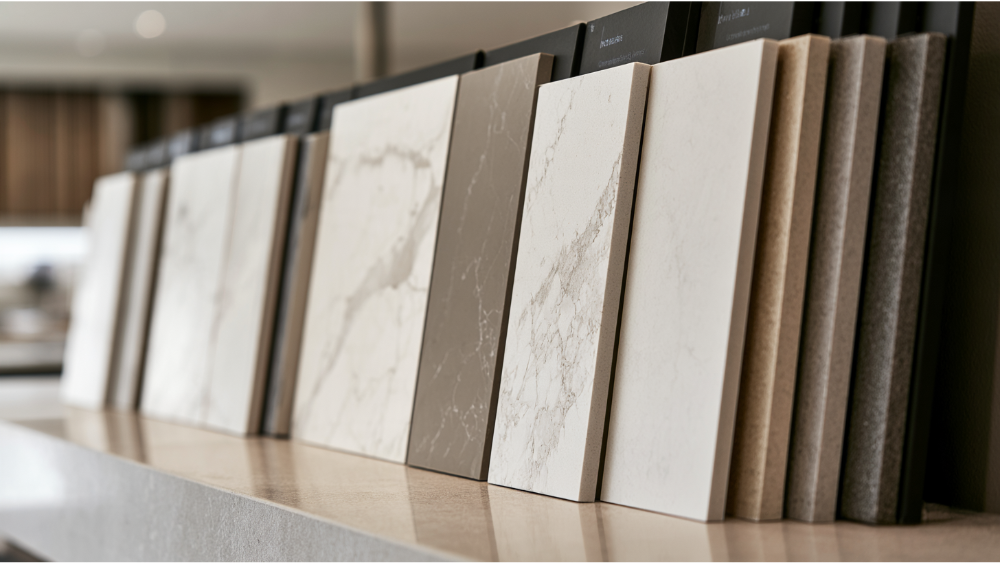
Cambria offers four primary finishes (Polished, Cambria Matte, Cambria Satin, and Cambria Luxe) plus design-specific textures such as Inverness, Satin Ridge, and Sculpted. Not every design is available in every finish or thickness, which catches people off guard late in the process. Cambria quartz is best known for dramatic marble look patterns across a very broad catalog, and designs such as Brittanicca Warm are the ones we’re asked for most often.
Silestone offers Polished, Suede, and Volcano finishes depending on color, and leans toward modern, European-influenced design, including bold colors and deeper saturated tones. Some current Silestone designs carry vein integration through the full thickness, which makes mitered edges, waterfall edges, and milled details look far more convincing. Both brands’ marble reproductions have gotten good enough that the difference at arm’s length is subtle.
Be careful with design counts you read online. Both portfolios are broad, Cambria claims the broadest selection, and both change constantly as colors get added and discontinued. What’s actually available in your market should drive the decision. For bathroom vanities, a remnant or partial slab can open up a design you couldn’t justify across a full kitchen.
Slab sizes, seams, and full slabs for large islands
- Cambria: standard 122 x 55.5 in., jumbo 132 x 65.5 in., select super-jumbo around 136 x 80 in. (confirm availability for your design). Thicknesses of 1, 2, and 3 cm, with countertops normally 2 or 3 cm.
- Silestone: standard about 118.9 x 55.1 in., jumbo about 126 x 62.6 in. Thicknesses of 12, 20, and 30 mm.
Nominal slab size is not usable finished-piece size, and the bigger published slab doesn’t automatically win the layout. Seam count depends on your island dimensions, vein direction, whether you want bookmatching, how the waterfall panels align, and where the sink and cooktop cutouts land. A Cambria jumbo can lose to a Silestone standard if the vein runs the wrong way for your island.
So approve a full-slab viewing or full-slab photos of the actual lot, plus a seam diagram, before fabrication starts. Cambria itself warns that a small sample doesn’t show all the characteristics of a full slab. A four-inch chip has never once predicted what a nine-foot island will look like.
Warranty comparison: read past “lifetime” and “25 years”

On warranty, Cambria leads with the stronger headline duration and the easier terms. Both brands offer strong warranties that cover manufacturing defects in the material, and neither one covers the part of the job most likely to go wrong. Cambria’s full lifetime residential warranty also transfers automatically to later owners.
| Cambria | Silestone | |
|---|---|---|
| Duration | Full lifetime, qualifying products installed after September 1, 2018 | 25 years residential |
| Transferable | Yes, automatically to later owners | Residential transfer per Cosentino terms |
| Registration | Not required; failure to register doesn’t reduce rights | Online within 6 months for full coverage |
| Proof of purchase | Purchase through authorized channels required | Must be retained; unregistered purchases from January 2022 on keep 3 years with invoice |
| Covers | Manufacturing defects in the material | Manufacturing defects in the material |
| Excludes | Fabrication and installation, improper support or substrate, heat and thermal shock, impact chips, outdoor installs, unauthorized resellers | Fabrication and installation faults, external force, inadequate support, structural movement, thermal shock |
| Claim deadline | Within 30 days of learning the supporting facts | Per Cosentino claim process |
| Pays replacement labor? | No, material coverage only | No, Cosentino supplies material but not fabrication or installation costs |
Note the Cambria exclusion for unauthorized resellers. Buying through authorized dealers rather than big box stores is what keeps Cambria’s lifetime coverage intact. A full lifetime warranty is also not the same thing as a lifetime limited warranty, so read the exclusions either way, because warranty coverage is only as good as the paperwork you keep.
Low-silica, sustainability, and fabrication safety
Two things get blurred together constantly here, so let’s separate them. An intact, installed quartz countertop in your kitchen is not the concern. The recognized hazard is respirable crystalline-silica dust generated when workers cut, grind, drill, and polish slabs in a shop.
Federal OSHA’s permissible exposure limit is 50 micrograms per cubic meter as an eight-hour time-weighted average, and NIOSH and OSHA recommend layered controls: lower-silica materials, wet methods, local exhaust, housekeeping, training, exposure monitoring, and respiratory protection. In California, Cal/OSHA’s Section 5204 treats cutting, grinding, drilling, and polishing artificial stone containing more than 0.1% crystalline silica as high-exposure trigger tasks, and further engineered-stone rulemaking has been through an advisory process. Check the current status with Cal/OSHA directly, since that picture keeps moving.
On sustainability, Cambria points to American production, responsible quartz sourcing, and water reclamation, and holds GREENGUARD Gold certification along with NSF/ANSI 51 food-zone listings. Silestone also has NSF/ANSI 51-listed colors and published GREENGUARD documentation. GREENGUARD Gold covers indoor air emissions and says nothing about scratch or heat performance.
Can Cambria or Silestone be used in outdoor kitchens?
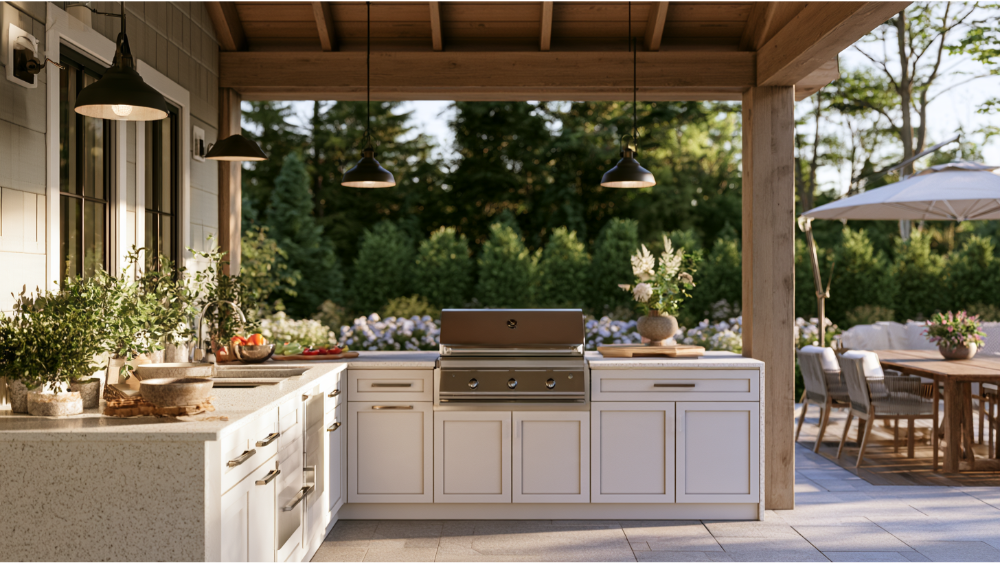
Treat both as indoor products. Cambria’s warranty specifically excludes outdoor and partially outdoor installations, and resin-bound surfaces can be affected by prolonged UV exposure and temperature swings. For a covered patio or a built-in grill island, look at countertops rated for exterior use such as Dekton or certain natural stone, and get the brand’s written outdoor position for your exact design before anyone orders material. We build outdoor kitchens often enough to know that this one decision prevents most of the callbacks.
Should you choose Cambria or Silestone?
Choose Cambria if:
- American manufacturing and family ownership matter to you
- A specific Cambria pattern or texture is your design anchor
- The automatically transferable lifetime warranty carries real weight
- A larger available Cambria slab genuinely improves your island layout
Choose Silestone if:
- Low-silica composition is a priority for you
- Recycled content and manufacturing resource claims matter
- A particular Silestone color, through-body vein, or finish fits the design
- More tiers and color flexibility help you balance the overall budget
Either works if the design is right, the slab layout is approved, you use trivets and cutting boards, and an accountable professional fabricates and installs it. After that it’s design preference, and personal preference is a perfectly good reason to pick one over the other.
On cost: Cambria generally sits at the upper end of premium quartz, partly because it’s manufactured in the United States, while Silestone spans more tiers. Price per square foot installed is also the wrong unit for this decision, because two kitchens with the same square foot count can price very differently once slab yield, seams, thickness, edge profile, and cutouts are settled. The figures floating around online rarely include fabrication or installation, which is why we quote by project.
Why fabrication and professional installation matter more than the logo
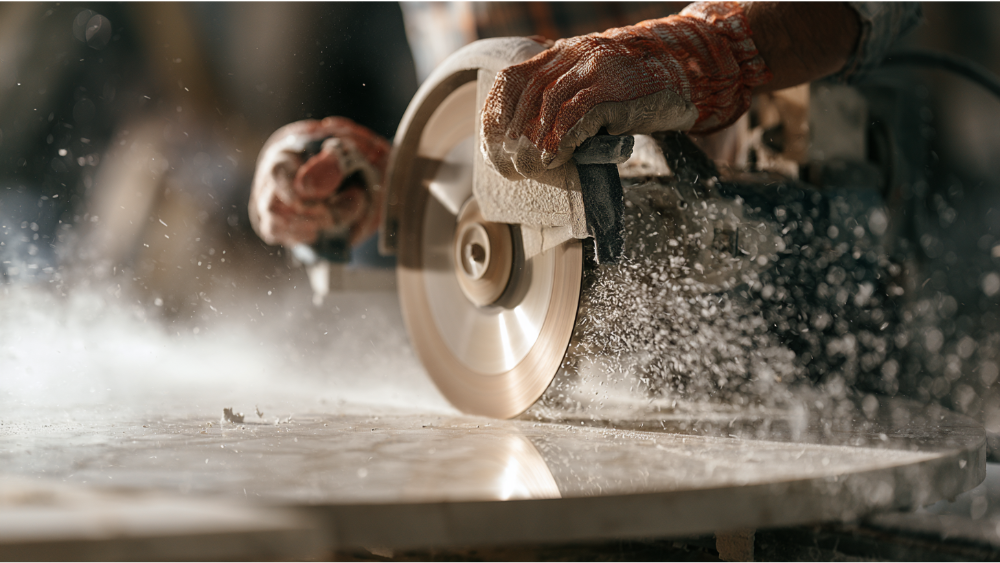
Look back at those warranty tables. Both brands cover defects in the material. Both exclude fabrication, support, and installation faults. Most countertops that fail do so right there, and it’s the part no slab brand will ever stand behind for you.
We handle all of it under one roof: design, templating and measurement, in-house CNC stone fabrication, edge profiles, cutouts, seam planning, and installation coordinated with your cabinets, sink, faucet, appliances, and backsplash. We won’t send you looking for another contractor to finish what we started.
We’ve been family owned since 2001, we’ve served 19,000+ homeowners, and we work under CSLB License #853669 as an A+ BBB Accredited and EPA Lead-Safe Certified firm. Our 24-month labor warranty on remodels sits alongside the manufacturer’s material coverage, not in place of it, and our DreamLine Custom Cabinetry carries its own limited lifetime warranty. Homeowners in Concord and across the Bay Area and Northern California can compare Cambria quartz countertops and Silestone as full slabs with us instead of choosing from a handful of four-inch chips.
Your showroom comparison checklist
Materials lie under fluorescent light and tell the truth in daylight, so bring your project with you when you come see slabs.
- A cabinet door sample and a flooring sample
- Paint colors and your backsplash choice
- Appliance dimensions and sink and faucet specs
- Island dimensions and your preferred edge profile
- Request a full-slab viewing or full-slab photos of the exact lot
- Ask for a seam diagram before fabrication begins
- Confirm finish and thickness availability for your chosen design
- Get the written care and warranty packet
- Confirm who fabricates and who installs
Frequently asked questions
What are the disadvantages of Cambria?
It isn’t heat-proof, so trivets are required, and edges near sinks and dishwashers can chip on impact. Outdoor installations aren’t covered, the warranty excludes fabrication and installation faults along with unauthorized-reseller purchases, and it generally sits at the upper end of premium quartz.
What are the negatives of Silestone?
Same heat and impact cautions apply. Full 25-year coverage requires registering within six months and keeping proof of purchase, and unregistered purchases from January 2022 onward retain only three years with the invoice. Approved claims supply material, not fabrication or installation labor, and color availability varies by market.
Can I use Clorox wipes on Silestone?
No, not as a routine cleaner. Cosentino recommends water with a mild or neutral soap and advises against harsh chemicals, bleach, and abrasives, which can dull the finish over time. Stick with a manufacturer-approved cleaner and rinse afterward.
What is the hottest trend for countertops right now?
Soft marble-look veining, neutral whites, and warm tones in matte, suede, and satin finishes, paired with mitered waterfall islands and thicker apparent edges. Through-thickness veining and choosing from the full slab are what make those looks land, which brings you right back to slab planning.
Compare both brands side by side with us
Come compare Cambria and Silestone as full slabs next to your cabinets, flooring, and backsplash, and leave with a seam plan and a written estimate. Call us at (916) 701-9660 to Schedule a Free Consultation, or Visit Our Showroom, our 20,000-square-foot Grand Kitchen and Bath Showroom in North Highlands. No pressure, just good information.