Key Takeaway
For a bathroom remodel, paint walls with a waterborne 100% acrylic formula rated for high humidity and labeled washable, choosing satin as the default sheen. Semi-gloss works best on trim and doors, and a bath-rated matte or satin belongs on the ceiling. Paint is the finish layer only and cannot substitute for proper waterproofing, ventilation, or moisture remediation behind the walls.
For most bathroom remodels, use a washable, moisture-resistant interior coating: 100% acrylic or waterborne latex rated for kitchens and baths. Satin is the safest default on walls, semi-gloss on trim and doors, and a bath-rated matte or satin on the ceiling when the manufacturer approves it for humid rooms. That’s the short answer for anyone standing in the middle of a remodel who wants paint that still looks new in five years, not just a pretty swatch on a card.
Here’s the part most guides skip: bathroom paint is a system, not just a color. Paint can’t fix a leak, replace a missing shower surround, or make up for a weak exhaust fan.
What Kind of Paint Is Best for a Bathroom Remodel?
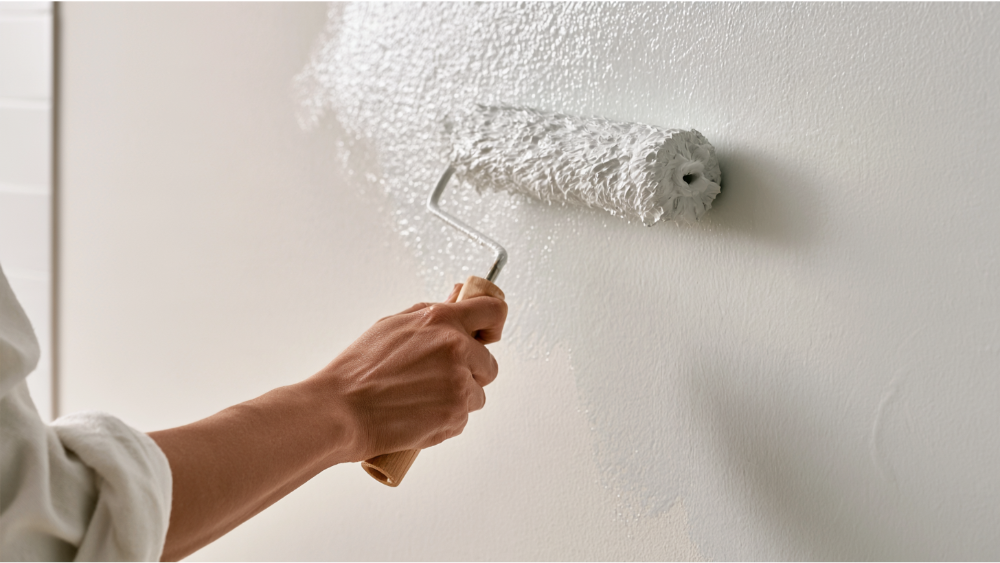
Pick a coating rated by its manufacturer for kitchens and bathrooms, then match it to the surface you’re putting it on.
| Surface | What to use |
|---|---|
| Walls outside the shower | Washable, moisture-resistant acrylic. Satin is the safest default. |
| Ceiling | Bath-rated matte or satin, only if the product is approved for humid rooms |
| Trim, doors, window casings | Durable satin or semi-gloss |
| Vanity and cabinets | A cabinet-grade coating system, not ordinary wall paint |
| Inside the shower or above the tub | An approved smooth, nonabsorbent surround. Not decorative paint. |
Sheen names and performance claims vary between manufacturers, so read the technical data sheet before you commit. Two ideas carry the rest of this article: the moisture zone (how much water that surface actually sees) and the coating system (primer and topcoat working together as the maker intended).
Start With the Moisture Zone, Not the Paint Color Card
Every bathroom has three zones, and they don’t get the same treatment.
- Direct wet zone: shower and tub walls. These need an approved nonabsorbent surround, not paint.
- Splash zone: behind the vanity, around the toilet. Use your most washable finish here.
- Humid but normally dry: remaining walls, ceiling and trim. This is where paint does its real work.
A powder room with no shower gives you far more finish freedom than a small full bath used twice a day. Ventilation changes the math too. A properly sized, ducted exhaust fan makes a bathroom dramatically easier to paint and keep looking good. In the 2025 U.S. Houzz Bathroom Trends Study, 58% of renovating homeowners added a ventilation fan.
Satin, Semi-Gloss or Matte: Which Bathroom Paint Finish Holds Up?
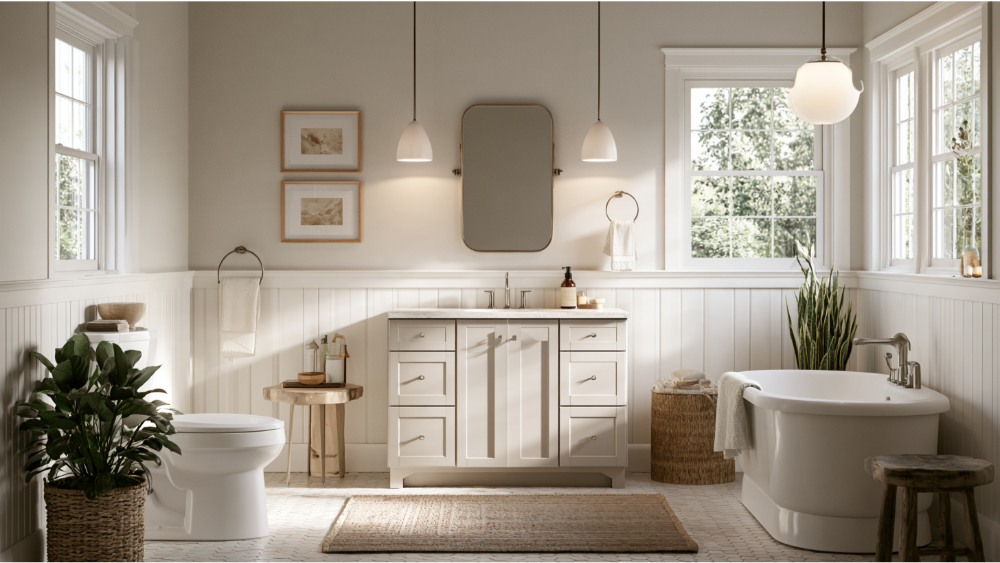
Satin is the balanced default. It wipes clean, resists steam, carries a soft glow, and forgives minor drywall imperfections better than glossier options.
Semi-gloss is the most durable and the easiest to scrub, which makes it the right call for trim, doors and high-contact walls. It also bounces light and shows every ripple in the wall, so prep work matters more.
Matte deserves a fairer hearing than it usually gets. Standard flat does show moisture marks and is hard to clean. But bath-rated matte coatings built on acrylic resins with mildew-resistant formulations exist, and the product’s data sheet decides, not the sheen name on the front of the can. Paint the ceiling too, in a bath-approved product. It brightens the whole room.
Does Mildew-Resistant Paint Actually Stop Mold? (And Do You Need Primer?)
No. Mildew-resistance claims refer to inhibiting growth on the surface of the paint film. They do nothing about mold behind drywall, a slow supply-line leak, or condensation from a fan that vents into the attic.
The EPA is direct about this: don’t paint or caulk over moldy surfaces. Clean up the mold, correct the moisture source, and dry the material first. The EPA recommends drying wet materials within 24 to 48 hours and keeping indoor humidity below 60%, ideally between 30% and 50%. The CDC uses a more conservative 50% ceiling.
When primer is worth it
- Bare or newly repaired drywall, joint compound and porous patches
- Water or tannin stains, after the source is fixed
- Glossy existing coatings, or a big color change
- Any time the manufacturer specifies a full system
Self-priming products don’t replace repair and cleaning. And when paint is failing because of something another trade did, our in-house team owns the fix. You’ll never go searching for a second contractor.
How to Choose Bathroom Paint Colors That Work With Your Tile, Vanity and Lighting
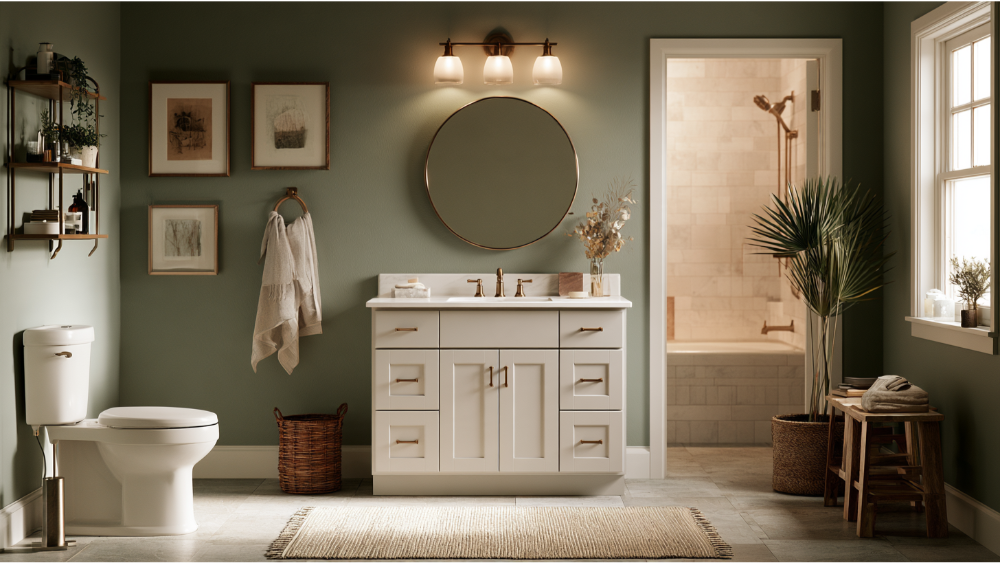
Choose paint last. The fixed materials have fewer options, so they lead:
- Shower or tub surround and tile
- Flooring
- Vanity or DreamLine Custom Cabinetry
- Countertop
- Plumbing and lighting finishes
- Paint color
- Towels, artwork and décor
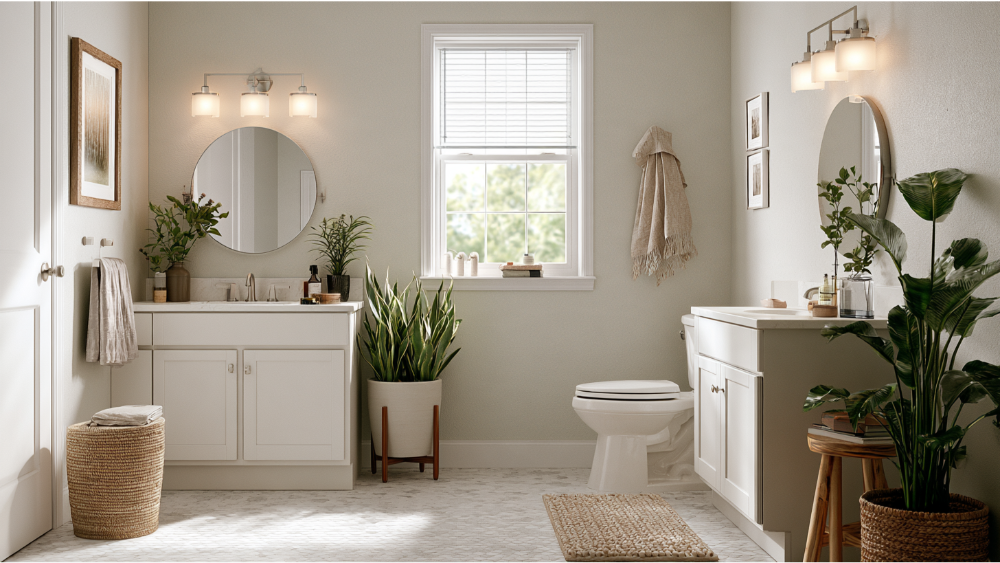
Match undertones before you match colors. A tile with warm cream veining will make a cool gray wall look dingy, while a warm white makes the same tile sing. Light rules everything here. A color’s light reflectance value tells you how much it bounces back, which is why pale shades open up a small bathroom and deep navy or charcoal feel luxurious in a larger one with real daylight. Warm LEDs neutralize cool grays; cooler bulbs sharpen warm tones. Tape large samples vertically on two different walls and look at them in the morning, at night under the vanity lights, and with the door closed.
Accent walls are popular for good reason: 31% of renovating homeowners in the 2025 study included one, often behind a mirror or open shelving. White (25%) and off-white (21%) remain the most-chosen non-shower wall colors, with gray, beige and blue following.
When Should Painting Happen During a Bathroom Remodel?
Paint goes near the end, but not all at once. Priming, finish coats and touchups belong at different stages:
- Design and material selection
- Demolition
- Plumbing, electrical and ventilation rough-in
- Inspections where required
- Wall repair, backer board and waterproofing
- Shower or tub and tile installation
- Drywall finishing and primer
- Finish coats, once the wet and dusty work is done
- Vanity, toilet, mirrors, lighting and hardware
- Final caulk, touchups and walkthrough
Exact order shifts with layout and installation method.
How long before you can shower?
Dry-to-touch, recoat, return to service, full cure and safe-to-scrub are five different things. One bath-rated matte lists one hour to recoat, 24 hours to full service, and two weeks before washing. One moisture-area coating lists 24 hours before shower use and seven days before scrubbing. Those are examples, not rules. Check the label and data sheet, and expect cool, humid conditions to stretch every window.
What Roseville and Northern California Homeowners Should Know
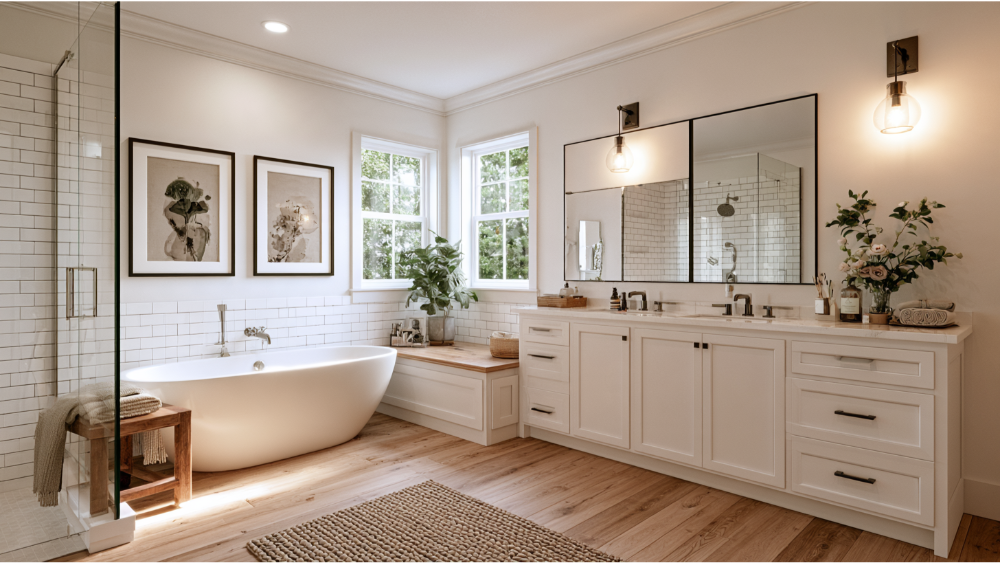
California’s building code requires a smooth, nonabsorbent finish extending at least 72 inches above the drain inlet at showers and at tub walls with showerheads, so paint is never a substitute for an approved surround (2025 California Building Standards Code, effective January 1, 2026). State residential guidance references 50 CFM demand-controlled local bathroom exhaust, with fan sound limits of 1.0 sone for continuous fans and 3.0 sones for demand-controlled ones, depending on scope. Verify permit requirements with the City of Roseville Building Division when plumbing, electrical, mechanical or structural work is involved. In homes built before 1978, the EPA Renovation, Repair and Painting Rule applies to paid work disturbing painted surfaces beyond the minor-repair threshold (generally 6 square feet per room indoors). We are an EPA Lead-Safe Certified Firm, and our California CSLB License is #853669.
Frequently Asked Questions
What kind of paint is best for high-humidity bathrooms?
A 100% acrylic or waterborne latex coating rated by its manufacturer for kitchens and baths, in satin or semi-gloss. Pair it with a working, ducted exhaust fan, because no coating compensates for trapped steam.
What colors make a bathroom look expensive?
Cohesive neutrals and soft whites that share undertones with your tile and countertop. A deep navy, charcoal or moody green on one accent wall adds depth, and consistent metal finishes with sparing black-and-gold accents pull the room together.
What color should you not paint a bathroom?
There’s no banned color, but avoid anything that fights your tile’s undertone, very dark shades in a small windowless bath, and standard flat paint in a daily-shower room. A classic base color also protects resale value.
Should I paint before or after tile and the vanity go in?
Prime before, apply finish coats after the wet and dusty trades are done, and save touchups for after the fixtures are set.
Let’s Transform Your Bathroom Under One Roof
Paint is the last visible layer of a coordinated plan. The tile, countertop, flooring, lighting and cabinetry all have to agree, and someone has to own the ventilation, drywall and plumbing behind the wall. We’re family-owned, we’ve been remodeling since 2001, and we’ve served 19,000+ homeowners by keeping design, permitting, material procurement, fabrication and installation in-house. Every remodel carries our 24-month labor warranty, and DreamLine Custom Cabinetry carries a limited lifetime warranty.
Bring your tile and countertop samples to our 20,000-square-foot Grand Kitchen and Bath Showroom in North Highlands and see the colors in real light. Schedule a Free Consultation or call (916) 701-9660.