Key Takeaway
For most indoor kitchens, quartz wins the dekton vs quartz vs granite countertops comparison because it is non-porous, requires no sealing, and delivers consistent patterns. Choose granite for a one-of-a-kind natural look and better hot-pan tolerance. Choose Dekton for outdoor kitchens, UV stability, and extreme heat, where it outperforms both with manufacturer-backed performance up to 538°C.
For most indoor family kitchens, quartz is the easiest all-around choice of the three materials. Quartz countertops are non-porous, no sealing required, and their patterns are predictable, so what you approve on the slab is what you get in your kitchen. Choose granite if you want one-of-a-kind natural stone with better tolerance for hot pans. Choose Dekton when outdoor use, UV stability, and extreme temperatures matter most. You’ve probably narrowed it to these three already, and what you really want to know is which one fits how your family actually cooks and lives. There’s no universal winner here. And most comparisons of Dekton vs quartz vs granite countertops skip a fourth factor entirely: who fabricates and installs the slab.
Key Takeaways: Dekton vs Quartz vs Granite Countertops at a Glance
Here’s the short version before we get into the details. Each row below reflects manufacturer guidance and industry care standards for these materials, not a scoring system.
| Dekton | Quartz | Granite | |
|---|---|---|---|
| Material type | Ultra-compact sintered mineral surface | Engineered stone (minerals, resin, pigment) | 100% natural quarried stone |
| Best use | Outdoor kitchens, extreme heat | Indoor kitchen countertops and baths | Indoor kitchens, natural-stone lovers |
| Indoor/outdoor | Both | Indoor (check the specific product warranty) | Both, slab-dependent |
| Heat resistance | Highest; hot pans permitted per manufacturer | Lowest; use trivets always | Good, but still use trivets |
| UV resistance | UV stable, won’t fade | Standard lines not recommended in direct sun | Varies by slab; some fade |
| Stain resistance | Very high (near-zero porosity) | Very high (non-porous surface) | Varies with slab porosity |
| Sealing | Does not require sealing | Does not require sealing | Most don’t need it; some benefit |
| Scratch resistance | Excellent (still use a cutting board) | Very good | Very good |
| Edge-impact concern | Requires experienced edge and cutout detailing | Chips possible at edges and sinks | Chips possible at edges and sinks |
| Appearance | Controlled colors, multiple finishes | Consistent, highly matchable | Unique slab to slab |
| Maintenance | Low maintenance: neutral soap and water | Low maintenance: neutral soap and water | Prompt cleanup, product-specific care |
| Warranty approach | 25-year residential, conditions apply | Varies by brand; registration may apply | No manufacturer warranty on natural stone |
What Are Dekton, Quartz, and Granite Countertops Made Of? Raw Materials and Manufacturing
These three materials come from three different worlds. One is sintered under enormous pressure, one is engineered in a mold, one is cut out of the earth. That difference in raw materials and manufacturing process explains almost everything else on the list.
What are Dekton countertops?
Dekton countertops are an ultra-compact mineral surface made with Sinterized Particle Technology. The manufacturing process compresses a blend of more than 20 natural minerals under intense pressure, roughly 25,000 tons of it, then fires the material at high temperatures. It’s fully inorganic, with no resins or organic additives. The same material also shows up in flooring and wall cladding. It isn’t quartz and it isn’t ordinary porcelain.
What are quartz countertops made of?
Quartz countertops are engineered surfaces: crushed mineral aggregate, typically including natural quartz crystals, blended with resin binders and pigments, then cured into slabs. Formulations vary quite a bit by brand and product line now, including newer low-silica materials, so the old blanket “90 to 95% quartz” claim doesn’t describe every slab on the market. Quartz is also not quartzite, which is a natural stone with different care requirements entirely.
What is granite?
Granite is natural igneous rock, quarried and cut into slabs with no manufacturing process to even it out. Color, pattern, mineral content, and porosity change from slab to slab, and that slab variation is the whole appeal. It’s also the reason you should approve the actual slab rather than a small chip sample. Natural materials don’t come with the greater consistency you get from a factory line.
Heat Resistance: Which Material Handles Hot Pans and Extreme Temperatures Best?
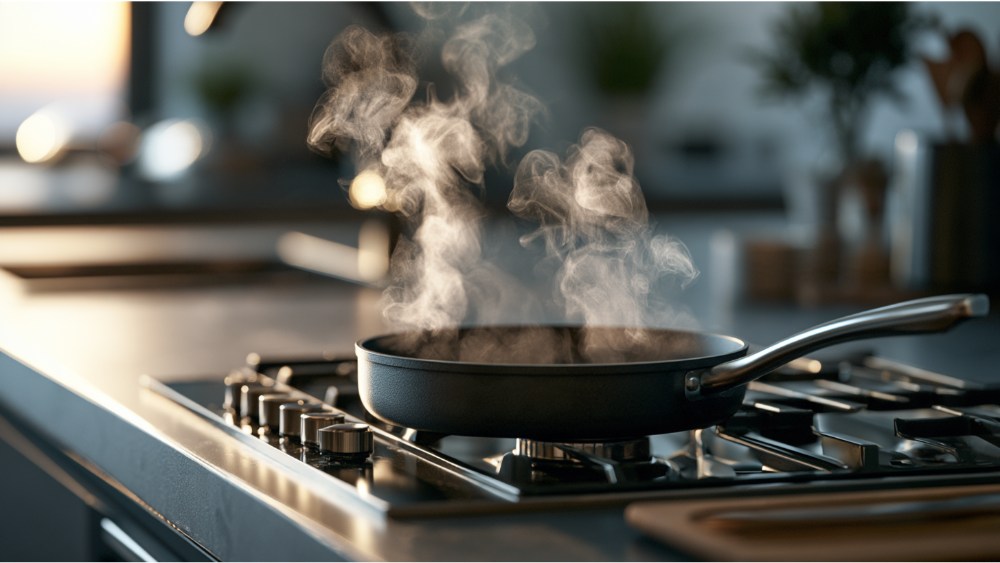
For pure heat resistance Dekton has the clearest manufacturer-backed advantage. Granite is generally heat-tolerant. Quartz needs routine heat protection, full stop.
Cosentino permits setting a hot pan directly on Dekton and publishes performance up to about 538°C (1,000°F), with conditions tied to proper fabrication, installation, and care. Because it contains no resin, it’s engineered to withstand high heat. Granite handles hot pots without scorching, but the Natural Stone Institute still recommends trivets or mats. Quartz is fine for everyday cooking, though the resin is its weak link: direct heat or heat left on the surface for extended periods can scorch or discolor it, and heat damage and thermal shock are commonly excluded from quartz countertop warranties. Manufacturers generally flag trouble above roughly 150°C (300°F).
None of these materials are heat-proof. The real risk is thermal shock, a screaming-hot pan set on a cool slab, or heat concentrated near a sink or cooktop cutout where the stone is already under stress. Use trivets on all three. It costs you nothing and it protects everything.
Which Countertop Materials Require Sealing, and Which Are Low Maintenance?
Quartz and Dekton tie for low maintenance, because neither of the two materials requires sealing. Dekton’s technical data reports water absorption around 0.1% under EN ISO testing and Class 5 results in the listed stain tests using agents like olive oil and iodine, so it resists stains from wine and cooking oil and carries strong moisture resistance. Quartz is non-porous for the same practical result on a busy kitchen counter.
Now the myth. “Granite has to be resealed every year” gets repeated constantly, and it isn’t a universal rule. The Natural Stone Institute states that most granite countertops do not require sealing. Some slabs do benefit from an impregnating sealer, and frequency should follow the specific stone and sealer instructions rather than a calendar. Sealing makes a surface more stain resistant. It does not make natural stone stain-proof.
Day to day, all three want the same thing: neutral soap and water, no harsh or abrasive cleaners, and prompt cleanup of spills. With proper care and the exact care sheet for the product you choose, daily wear stays cosmetic instead of permanent.
Scratches, Chips, and Repairs: What Long-Term Durability Really Means
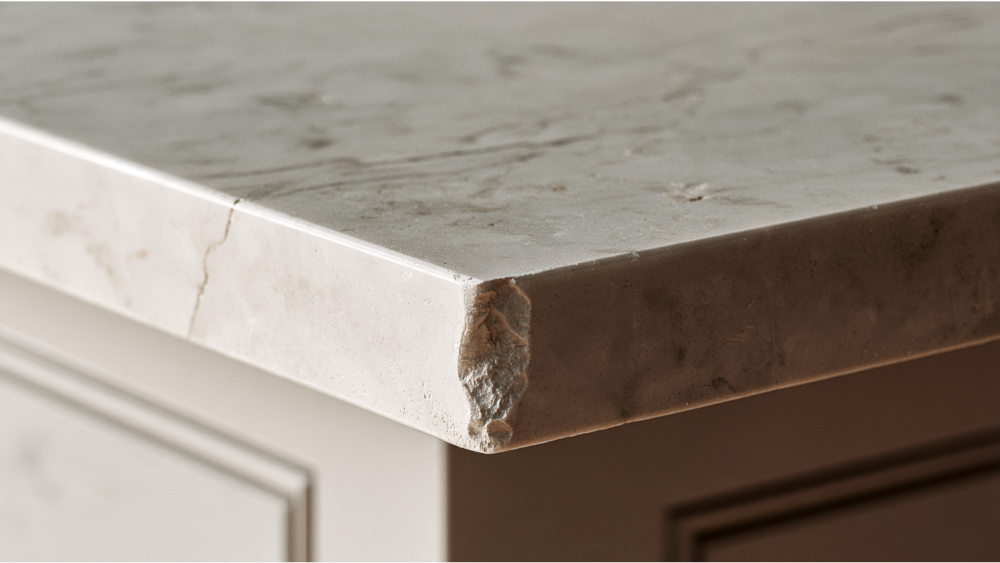
All three are extremely durable surfaces. But surface scratch resistance and edge-impact resistance are two different things, and conflating them is the single biggest mistake in countertop comparisons.
- Open-surface scratching: Dekton’s exceptional durability makes it very hard to scratch, though Cosentino still recommends a cutting board (mostly to protect your knives). Quartz and granite both hold up well to normal use.
- Exposed edges: This is where every hard surface is vulnerable. A significant impact at an overhang corner, say a dropped cast iron skillet, can chip any of the three. Dekton’s warranty excludes impact chips, and quartz manufacturers state plainly that no stone surface is scratch-proof or chip-proof.
- Sink and cooktop cutouts: Concentrated stress points. Tight or square internal corners are where cracks start.
- Thermal shock: Sudden swings between high temperatures and cool stone, especially near cutouts.
- Cabinet and substrate movement: Warranties exclude damage caused by settling or insufficient support. If the boxes underneath aren’t level and solid, the slab pays for it.
Will Dekton chip?
Yes, at an exposed edge or corner, the same as quartz or granite will. Dekton’s thin profiles and mitered edges bring real fabrication requirements, and a chip from impact is not a warranty item. We’d rather tell you that than sell the material as flawless. On repairs, success depends on the color, pattern, finish, size and location of the damage, and whether matching material is available. Ask your fabricator about your specific slab instead of trusting a universal ranking.
Which Countertop Is Best for Outdoor Kitchens and Direct Sun?
What Dekton Offers Outdoors
Dekton wins outdoors, and it isn’t close. It’s UV stable and won’t fade under prolonged exposure to UV rays, which is why it’s the default for patio bars, barbecue islands, and full outdoor kitchens. Standard quartz lines are generally not recommended for outdoor use because sun exposure can damage the surface, and major brands exclude outdoor installations from their warranties. Check the warranty for the exact product rather than assuming all quartz behaves the same. Granite can go outside, but fading and change over time depend on the slab, so confirm the specific stone, finish, sealer, and support with your fabricator.
Summers in the Sacramento and Roseville area are long, hot, and bright. Covered patios, outdoor kitchens, and rooms with big west-facing windows take real sun here, so we raise UV stability early in those conversations.
Which Material Looks Best in a Finished Kitchen?
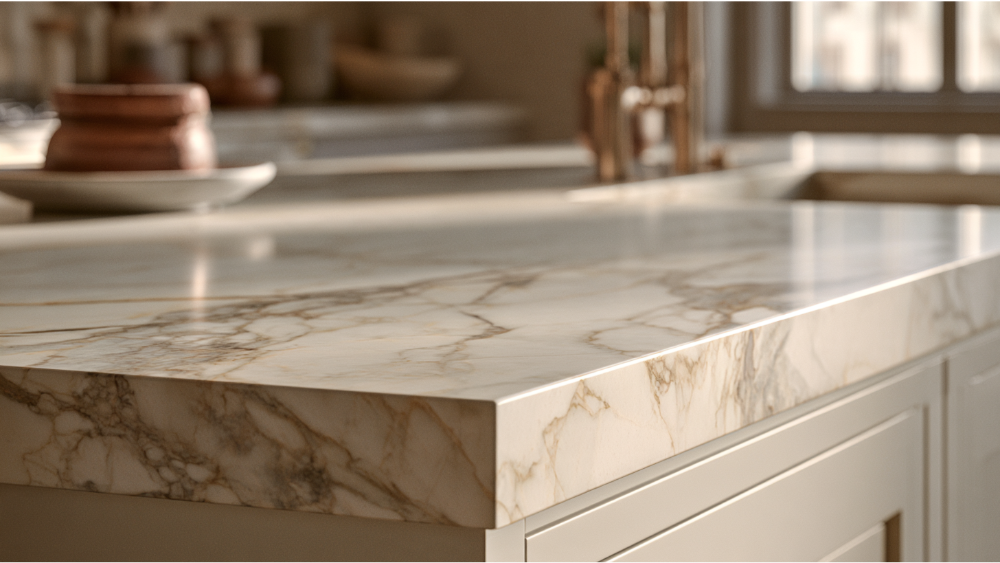
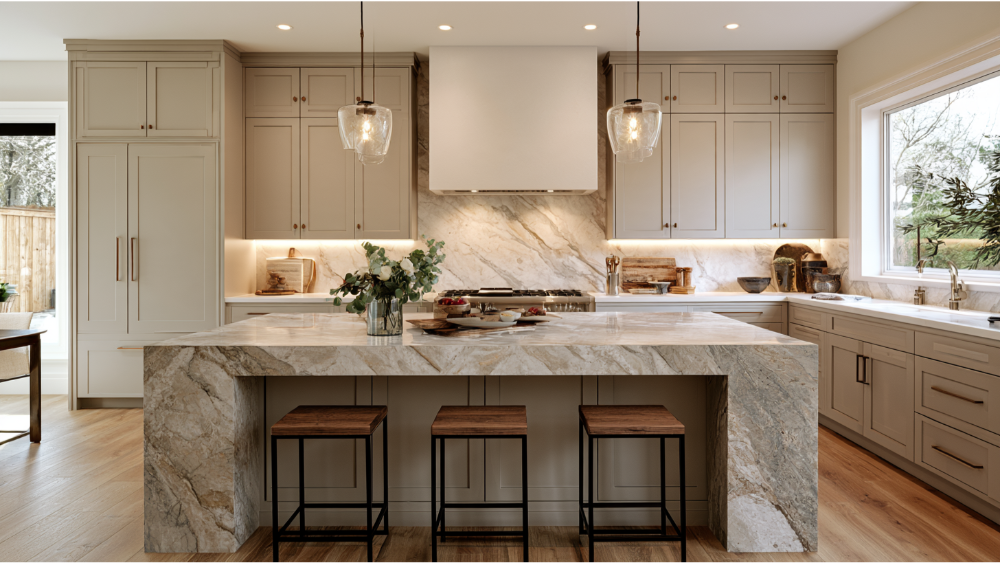
This one is preference, not performance. Granite gives you a slab nobody else has, with natural character you can’t manufacture. Quartz offers predictable color and consistent patterns that can be matched to nearly any cabinet or paint thanks to pigments. Dekton offers controlled colors and several finishes, including looks that read as natural stone. All three are seen as an upgrade by buyers, so any of them supports resale value.
A four-inch chip sample will mislead you. View full slabs, both vertically and laid flat, under lighting similar to your kitchen, next to your DreamLine Custom Cabinetry door, paint chip, backsplash, and flooring samples. Not every veined design carries its pattern through the edge, so thickness, mitered edges, seam placement, and pattern continuity all get planned during design. Our Kitchen Visualizer Tool helps you narrow the field before you walk in.
What Do Countertop Warranties Actually Cover?
Warranty length is not a durability score. Read the exclusions, not the headline.
- Who registers it, and by when? Silestone offers 25 years on qualifying registered residential products, with registration required within six months.
- Does it transfer to the next owner? Cambria’s full lifetime warranty on qualifying interior products installed after September 1, 2018 is transferable.
- Does it cover product defects only, or workmanship too?
- What’s excluded? Dekton’s 25-year residential warranty (10 years commercial) excludes impact chips, improper support, and misuse, with heat and outdoor coverage conditional on following the fabrication and care manuals. Cambria excludes direct or sustained heat, outdoor installs, impact, improper support, and fabrication or installation defects, and requires claims within 30 days.
Manufacturer warranties cover the materials. The fabricator and installer stand behind the work. That’s why we back every remodel we complete with our own 24-month labor warranty, separate from whatever the slab manufacturer provides. Verify current warranty terms with us at the time you purchase.
The Hidden Fourth Comparison: Who Fabricates and Installs Your Countertop?
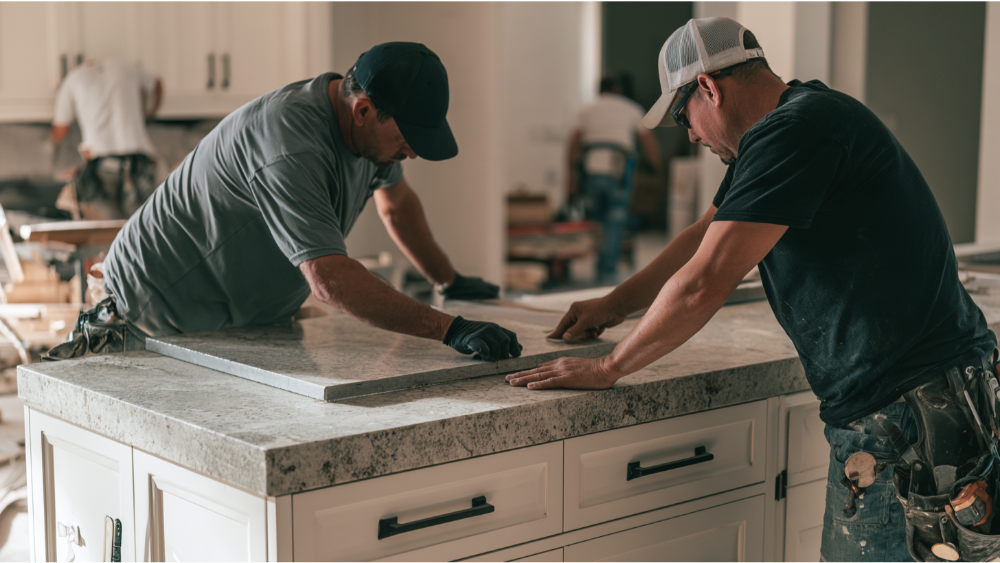
The material is only half the decision. The other half is the sequence: slab selection and approval, cabinet leveling and support, templating, CNC cutting, cutout radii, seam planning, edge fabrication, overhang support, transport, installation, final inspection. Skip a step and the best slab in the building underperforms.
Here’s how specific it gets. Dekton’s installation guidance calls for a minimum 5 mm internal radius on a boxed cutout, 10 mm recommended at cooktops, and 20 mm recommended at sink cutouts. Miss those and you’ve introduced a stress point the warranty won’t cover. Many homeowners never hear about this until something cracks.
We do all of it under one roof. Design, materials selection, CNC stone fabrication in our own shop, and installation by our own team, family-owned since 2001. You’ll never go looking for a second contractor to finish what we started. CSLB #853669, A+ BBB accredited, and 19,000+ homeowners served.
A California Note on Safe Countertop Fabrication
Respirable crystalline silica is a dust hazard created during cutting, grinding, and polishing in the shop. It is not a warning about living with a finished, installed countertop. OSHA’s permissible exposure limit is 50 µg/m³, and Cal/OSHA sets high-exposure task thresholds at 0.1% for artificial stone and 10% for other silica-containing materials. California’s rules are still evolving, including a September 2026 discussion draft proposing further restrictions. Quartz is not banned. It’s fair to ask any fabricator how they control dust.
Which Countertop Should You Choose? Best Picks by Household
When to Choose Quartz
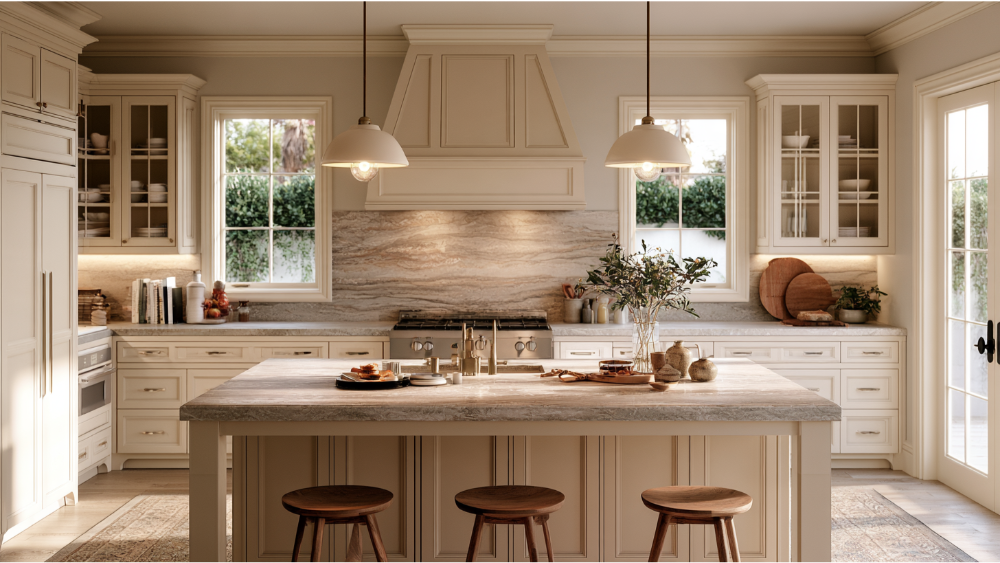
Pick quartz for a typical indoor kitchen, the lowest routine maintenance, and a consistent appearance across a long run of counter. No sealing required, no surprises in the pattern.
When to Choose Granite
Choose granite when you want a natural, one-of-a-kind look and a surface that shrugs off hot pots better than quartz does. Approve the actual slab, not a sample chip.
When to Choose Dekton
Choose Dekton for outdoor kitchens, strong direct sun, and frequent high-heat cooking, with granite a solid second. If exposed edge chips worry you, design the edges and cutouts first, then pick the material.
Best Countertop for a Busy Family Kitchen
Quartz, most of the time. No sealing, predictable pattern, and a non-porous surface that forgives the spilled juice nobody wiped up. In a busy family kitchen, keep trivets by the range and you’re set.
Frequently Asked Questions
What are the disadvantages of Dekton?
Edges and cutouts are its weak spot. Impact chips at exposed corners are excluded from the warranty, fabrication demands specific cutout radii and skilled handling, and it typically sits at a higher price point than comparable quartz or granite.
Dekton vs quartz: is Dekton better?
In a Dekton vs quartz matchup, Dekton is better for extreme heat and outdoor use. For a standard indoor kitchen, quartz usually delivers the same low maintenance with simpler fabrication and more forgiving edges. The right answer depends on where the countertop lives.
Can I use Clorox wipes on Dekton?
Neutral soap and water is the manufacturer-recommended routine cleaner. Harsh or bleach-based wipes aren’t part of the recommended care routine, so keep them for other surfaces and check the current Dekton care sheet for anything beyond daily cleanup.
Does granite need to be sealed every year?
No. The Natural Stone Institute states that most granite countertops don’t require sealing at all. Some slabs benefit from an impregnating sealer, and frequency should follow the specific stone and sealer instructions rather than an automatic annual schedule.
See Dekton, Quartz, and Granite Side by Side in Our Showroom
Photos can only take you so far. Compare all three as full slabs and fabricated edge samples at our 20,000-square-foot Grand Kitchen and Bath Showroom in North Highlands, the largest showroom of its kind in the region and a short drive from Roseville. Bring your cabinet, paint, backsplash, and flooring samples. Slabs are quoted by the square foot, but the installed number depends on thickness, cutouts, edge profiles, seams, and support, so a free estimate built around your project details is the only honest answer on cost. Tell us how your family cooks and we’ll help you land on the right surface. Call (916) 701-9660 or Schedule a Free Consultation.
Reviewed and updated September 2026. California silica fabrication rules are still developing; warranty terms should be verified at time of purchase.